Many Success Stories Have Developed in Superior’s Commercial Kitchen
Business development incubators first gained traction in the 1980s, more as a means of providing office space and amalgamation of existing companies under a single roof than supporting new opportunities. By the year 2007, there were an estimated 1,400 BIs in the U.S., the majority of them publicly funded.
At the outset, incubators were focused on industrial development and technology start-ups, giving little consideration to the service industry as a means of generating small businesses. In Superior, an incubator program was developed in the 1980s through an Economic Development Authority (EDA) grant to the city of Superior and Douglas County.
A facility was built in the economically depressed North End, operated by the Douglas County Development Association under the direction of Doug Finn, which included something of an anomaly, a commercial kitchen.
Finn’s prescience has served Superior and the surrounding area extremely well.
“There continues to be a great need and interest in it,” says Caesar, the DA’s current Executive Director. “The commercial kitchen facility, the only one of its size north of the Twin Cities, is located in the Superior Business Center at 1423 North 8th Street and continues to be the launching point and hub of development for a wide range of entrepreneurial culinary businesses.
“Our preference is, and the whole concept is, that we were growing businesses that we locate in Douglas County, but we take Minnesota businesses as well,” explains Caesar.
For example, Northern Waters Smokehaus started in the commercial kitchen but ended up locating in Canal Park, while Love Creamery ended up going to Duluth but have now come full circle, landing in Billings Park. Overall, the majority of the start-ups remain in Wisconsin.
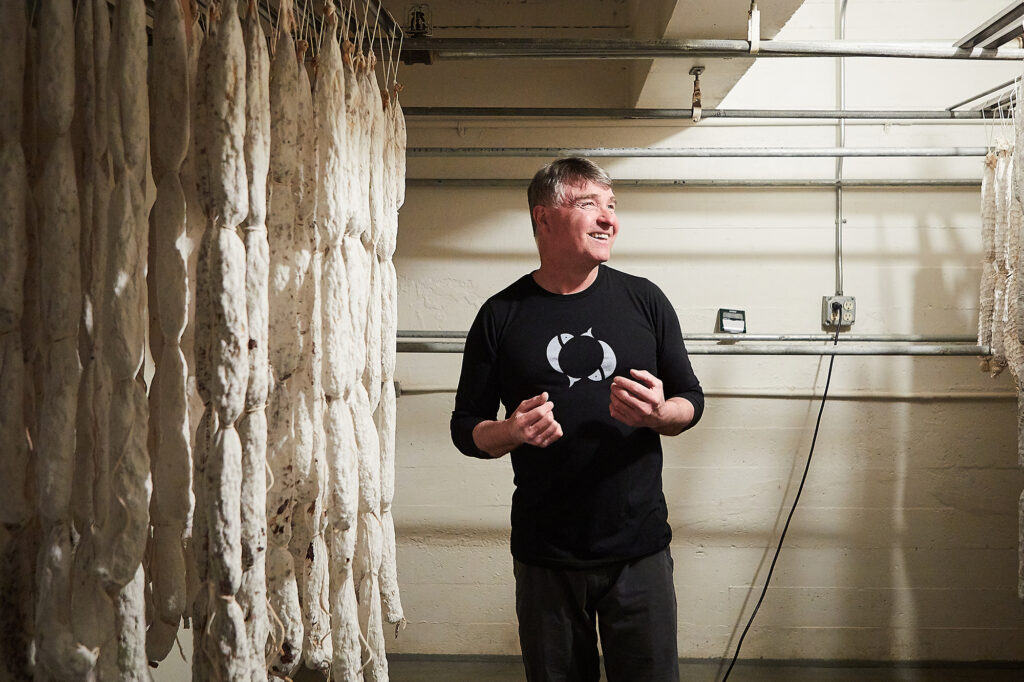
Eric Goerdt, owner of the popular Northern Waters Smokehaus, spent three years in the SBC building his business. He recalls pitching his idea of smoking fish in the kitchen in 1998 to Charlie Glazman.
“I had a smoker at my house and was honing my skills when I decided to take a chance at this,” Goerdt said.
He contacted Glazman at the SBC, who encouraged Goerdt to bring his smoker in and set up shop.
“Their being amenable, with Charlie saying ‘Yes,’ was definitely instrumental in me starting the business. Otherwise, it would have been really, really hard. Now we have 75 employees. I’d say it’s a great place to start.”
Following his success, Goerdt encouraged Nicole Wilde to start her business there. As far back as 2010 Wilde was weighing options.
“I was looking to start my ice cream business, and I did not want to be all in at that time. It was just something that I was exploring to see if I wanted to really make ice cream for a living,” she recalled. “I was looking for a community commercial space. I needed a place to make ice cream; just to give it a whirl without having all the initial investment.”
The kitchen was exactly what Wilde was looking for, serving as the launching pad for her venture. In 2026 Love Creamery opened its newest location, this one in Superior at 2704 North 21st Street. Going forward, the Billings Park location will serve as their new headquarters.
“I think it’s an incubator where people should eventually get up and go and grow their business someplace else, which is exactly what I did,” Wilde said. “I opened a first store and then a second store, and now we are back full circle in Superior with a large production facility and our third retail store.”
The point is, added Goerdt, “she’s hired a bunch of people on both sides of the bridge. It adds to the region’s economy when you can grow these businesses without them having to take that big risk.”
“When you’re thinking about these small businesses, you don’t know if it’s a good idea until you try it, right?” adds Jenice Meyer, Assistant Director, who works alongside Caesar at the SBA and DA. “You’ve got to see if there’s a possibility, and then after that, people can put in the work and the time, and we provide the space to be able to help them to see if this is a concept that can really grow and sustain itself.”
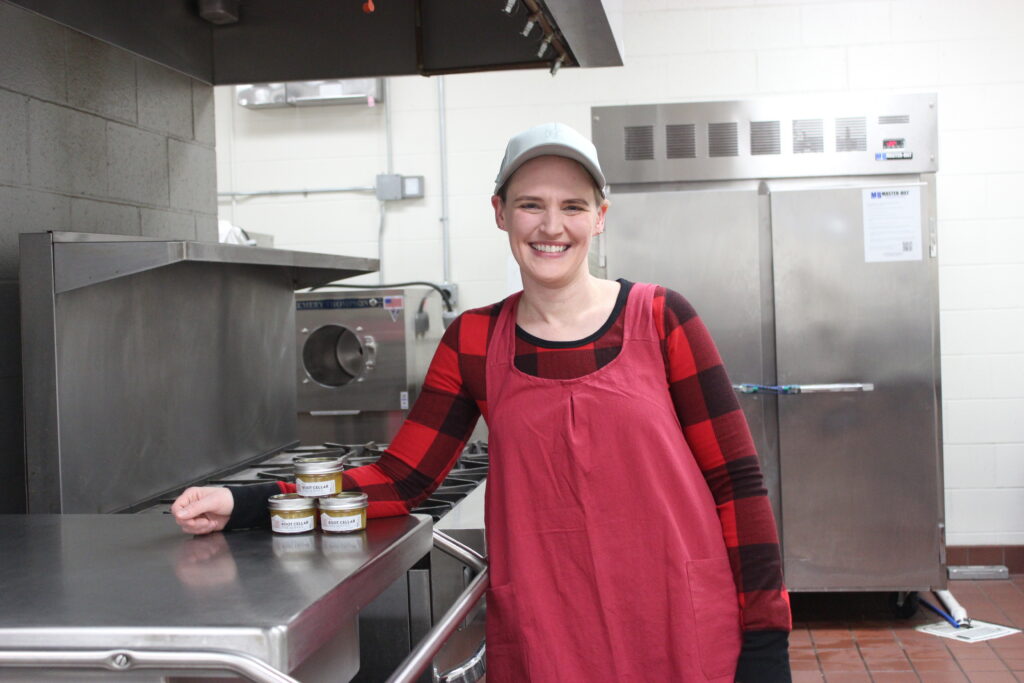
New to the kitchen in 2025 is Manon Seitz, owner of Root Cellar Preserves. Seitz wants to make the transition from a cottage industry/farmer’s market enterprise to a full-on business venture. “I’ve been trying to niche myself as focused on flavors that are not what you would find in your average grocery store,” she said.
Seitz describes Root Cellar Preserves as a small batch company that does jams and hot sauces. “I’ve been selling jams and hot sauces and other canned stuff at farmers markets for the past three or four years, and I always met people who said, ‘We’d love to put it in our shops. I’d love to put your hot sauce on my tables.’ I was always, in the back of my mind saying, ‘Oh, I would love to do that, but how scary is it going to be? Can I find a kitchen? What are the rules? How do I have to, like, manage all of that?’”
As the new kid on the block, Seitz is taking advantage of member programs and support offered by the DA to give her business a solid foundation to build upon, including access to WiSys VentureHomes, a network of startup hubs that combine statewide resources with community initiatives to provide local entrepreneurs access to a full menu of startup resources in their community.
Locally, the DA connects members with classes by industry experts like Duluth restaurateur Tom Hanson, and certified culinary professional Arlene Coco.
“They were really helpful,” says Seitz. “The Superior kitchen knows what they’re doing. They’ve done this before. I was very nervous and apprehensive, but it’s been significantly less stressful than I thought it was going to be.”
Skin In The Game:
How The SBC’s Work
Having a business plan is the first step for anyone looking to enter into an agreement with the Development Association to use the commercial kitchen or rent any space within the three Superior Business Centers. Think of it as the cornerstone brick of any building.
“If they don’t have a business plan then we refer them to somebody in our building here that can help them write one,” explains Caesar.
He and Meyer agree that without a plan it is difficult to assess a way forward.
“We look at their business plan and 1) try to analyze what the real feasibility of that business is, and 2) look at their financial projections of what they can afford to be paying for rent,” explains Caesar.
If someone is having difficulty with their plan, the DA often refers them to Mike Hill, business consultant with the Small Business Development Center for additional help.
Affordability is one of the biggest assets of the commercial kitchen. Participants sign a yearly, renewable lease and pay a base amount for rent each month to cover general expenses. In addition, there is an hourly rate paid for usage.
“We always want some skin in the game, but we’ve had some tenants in here at very, very low prices, and even some, not in the kitchen, but others, where we’ve suspended their rent for many months to help them get on their feet. Then, as they grew and things got better, we started charging more,” said Caesar.
Users of the commercial kitchen pay a base rate, with Minnesota businesses paying a slightly higher fee.
“Our base rate for a Wisconsin business is $75; it’s $100 for a Duluth business. Our hourly rate for Wisconsin businesses is $15 per hour while Duluth businesses are billed $20 per hour of use because our real objective is, and the reason that the business center was started as an incubator, was to incubate businesses for Superior and Douglas County.”
The kitchen currently has about a dozen users, some more active than others, and some, like food trucks and a camping cuisine company, are seasonal enterprises.
An important part of the SBC are the anchor tenants in each of the three buildings whose rent helps subsidize the start-up businesses.
“When we talk about our rates to commercial kitchen tenants and/or possible tenants, those who have been around a little bit or have some background in it are really impressed that we’re able to do it for a low cost. Additionally,” explained Caesar, “there’s free Wi-Fi in the building. They’re not paying for that. They’re not paying any utility charges unless they’re a larger user. For the most part, they’re paying no utilities or internet fee. It’s a real basic base rate to cover equipment usage for things like the dishwasher. The intent is, again, that we want the businesses to grow and get out into the commercial market and thrive.”
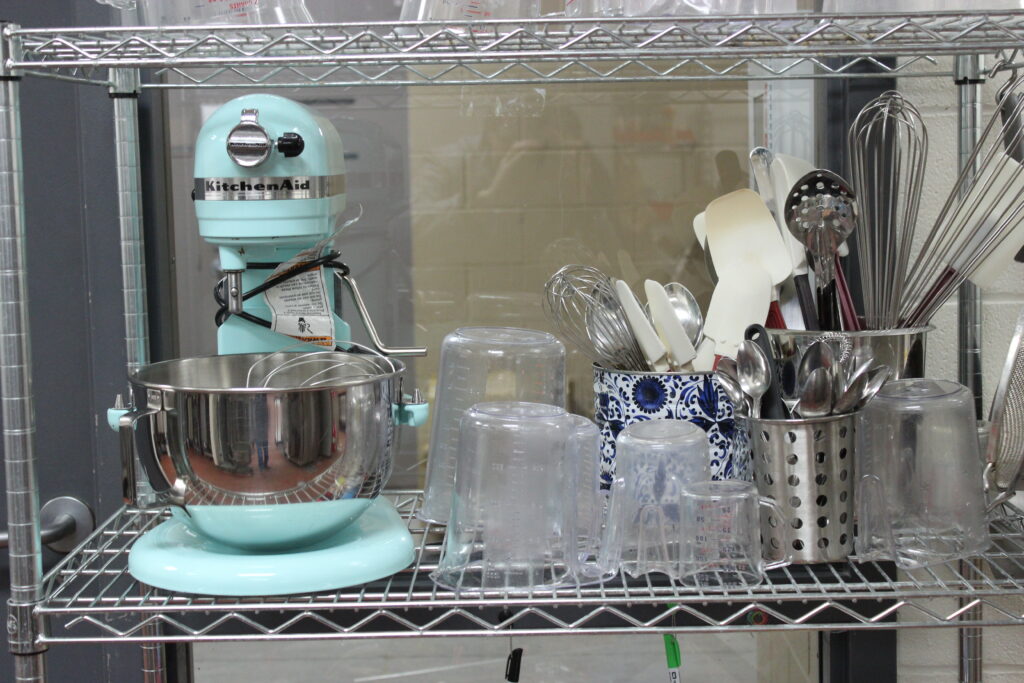
Like a good recipe, there are steps that need to be taken by businesses and start-ups that are fundamental to state and federal regulations and specific rules of the Development Association. For instance, liability insurance is a requisite for operating in the city- and county-owned building. Users need to meet all the proper licensing requirements of Douglas County, the USDA, as well as state health department regulations, and have their certifications like ServSafe up to date.
Kitchen users are required to read, adhere to and sign a shared kitchen document about component standards and record keeping for things like temperature control and food safety, and have their food handlers license posted in the kitchen office.
The staff of the DA are available to help start-ups navigate all these regulations. “We don’t have all the expertise,” admits Caesar, “but we know the people that do.”
Should I Stay or Should I Go
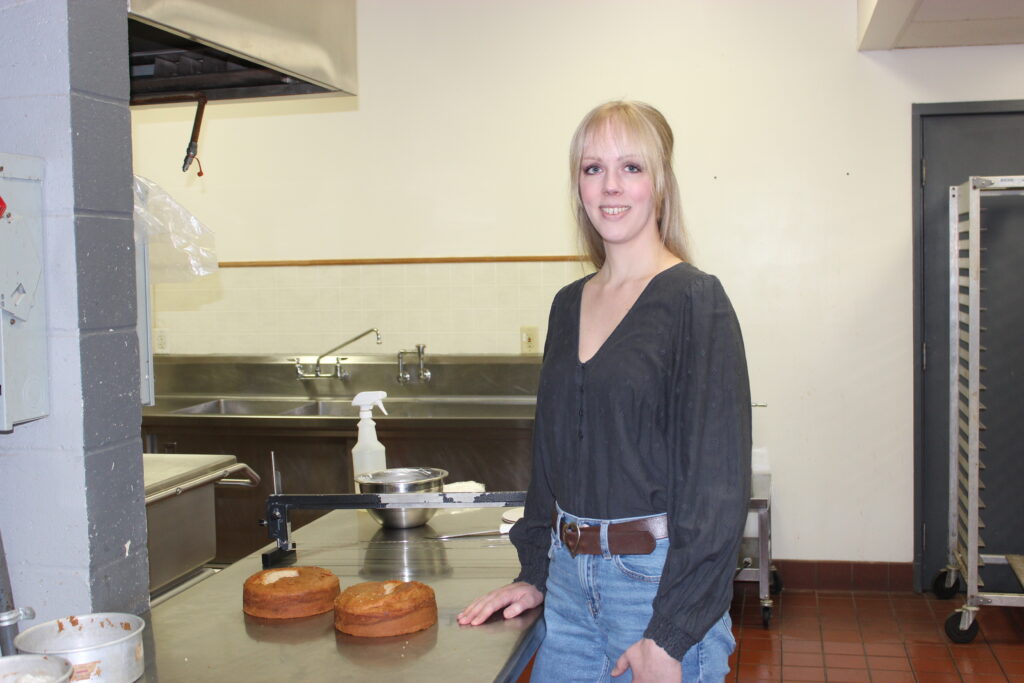
Not all businesses working out of the commercial kitchen do so with the intent of opening a stand-alone retail operation. While the kitchen promotes the ability to make a living, the volume of work often doesn’t lend itself to expansion beyond the confines of the Superior Business Center facility. How Sweet It Is Cakes, owned by Lila Wilson, is an example of an owner that would have a hard time surviving were it not for the kitchen.
A graphic artist by training, Wilson started in 2018 as a cake decorator for How Sweet It Is Cakes, operating out of the Duluth Grill until the restaurant stopped sharing their kitchen space, moving the cake business to the Superior Business Center.
“When I took over, I had no designs to own a bakery. It was a real learning experience. At the time I took over, I was only a cake decorator. I didn’t really do a ton of the other work and I didn’t work one-on-one with clients,” admits Wilson. “Obviously, I also wasn’t doing all the things that are associated with being a business owner; the books and taxes and all of that good stuff. So having to learn and take on that was kind of crazy.”
The support Wilson received from Jim Caesar and the DA was critical for her business. “When he knew I was taking over ownership, Jim walked me through the signed lease, how I would operate out of here, and introduced me to the programs offered through the DA.”
The majority of Wilson’s business is during the spring and summer wedding season.
“Having the space here has been so helpful because I have a consistent base rent, and the rest of it is based on our hours of usage. When I’m here in summer, my rent reflects that, but during the winter, when I’m not having to utilize the space as much, I’m also not having to pay out a ton in rent every month when I’m not having as many orders at the door,” says Wilson. “That’s definitely been a huge help in allowing me to stay operating.”
Her time spent in the commercial kitchen has also given her time to think about the direction of her business and her goals for the future.
“As I’ve gone through the years now, I’ve learned I don’t want to have my own brick and mortar or storefront. It’s just not where I want to take the business,” she said. “Weddings are our primary business, so we’re essentially a caterer. I don’t need a brick and mortar for that. The space is really great for how that operates with that seasonality.”
One of the longest-running success stories is that of Connolly’s Tom and Jerry Batter, another of the seasonal users of the kitchen. Superiorites will likely recall the Connolly Bakery on Belknap where the product originated in the late 1940s. Today, the rights to produce the popular, ready-to-use, non-alcoholic mix have been handed down to Steve Knauss, owner of the Thirsty Pagan. Knauss and his business parters are one of the longest tenured users of the commercial kitchen.
Every October for the past 18 years they take up a two-week residency at the kitchen to prepare their holiday delight.
“We went there and started manufacturing, and we were horrible at it, but they had all the facilities we needed. They had a loading dock, they had a walk-in cooler, they had a freezer, they had dry storage, they had a mixer; they had a facility and the space to do it. It was everything that we possibly could need, and we didn’t have to buy anything. Renting price was perfect,” concluded Knauss. “It was inexpensive and we’re like, ‘this is great.’ We’ve literally been there ever since.”
Follow Your Dreams
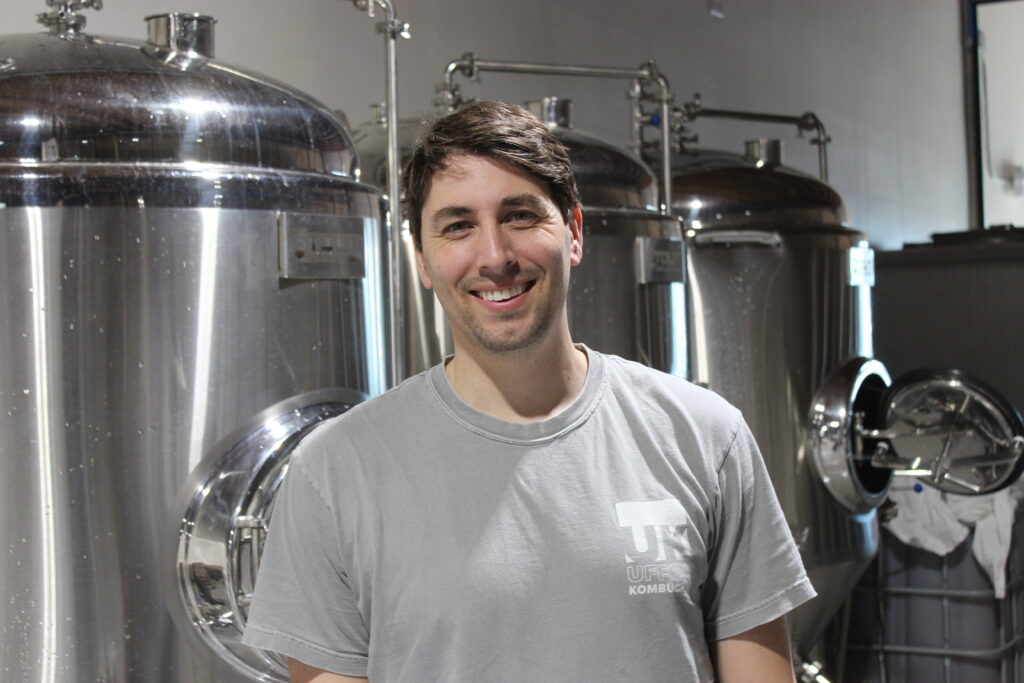
“There’s no bad idea, until we prove it’s a bad idea,” intones Caesar. One of the Development Association’s current shining stars is Uffda Kombucha, purveyors of a unique blend of flavorful kombucha teas. Co-owner Colin Zervas and his business partner McKenna Dagger evolved their idea from Colin’s home kitchen to the commercial kitchen.
At times it was a bit like managing wild horses admitted Caesar. “They actually wanted to grow too fast. We kind of held them back a little bit, but they did need more space for the rate of growth they were at, so we moved them over to our Tower Avenue building where they had more space, more refrigeration capabilities.”
In the Old Post Office, Zervas took advantage of a $10,000 loan from the DA’s revolving loan fund, which enabled them to purchase additional fermentation tanks to grow their business.
“There were no payments for that loan for six months and then a five-year payback,” said Caesar. “It’s the closest thing we could get to angel funding. They were here for a little over two years before we graduated them out of here,”
Last year, Uffda Kombucha struck gold, establishing a brick-and-mortar presence at 1015 Tower Avenue.
One of the biggest lessons Zervas learned was to take advice and put it into action, a process that all comes down to building trust.
“Jim does a really good job of building that,” says Zervas respectfully. “He’s very trustworthy, tells you how it is, and that’s helpful; it’s not always encouragement, right? He’ll say, ‘Hey, I don’t think this is working out, or you need to make a change,’ or you know, those harder conversations. It’s not always being a cheerleader. It’s telling you what you actually need to hear so you can succeed.”
The effort and work of the Development Association and its commercial kitchen is an integral part of the local business ecosystem. Throughout Superior, Douglas County and the area, there are many businesses that would not be operating if not for the commercial kitchen and the Development Association.
“It’s not just this standalone kitchen off somewhere. It’s actually a part of these larger business incubators, and a part of the Development Association helping business to grow,” concludes Jenice Meyer, who offers this advice, “If you’re thinking about starting a business, Go For It!”
Patrick Lapinski is a freelance writer who grew up in Superior.