Young Owners Have Big Plans for Drifty Acres Farm and Regenerative Ruminants
There’s no shortage of mouths to feed at Drifty Acres Farm.
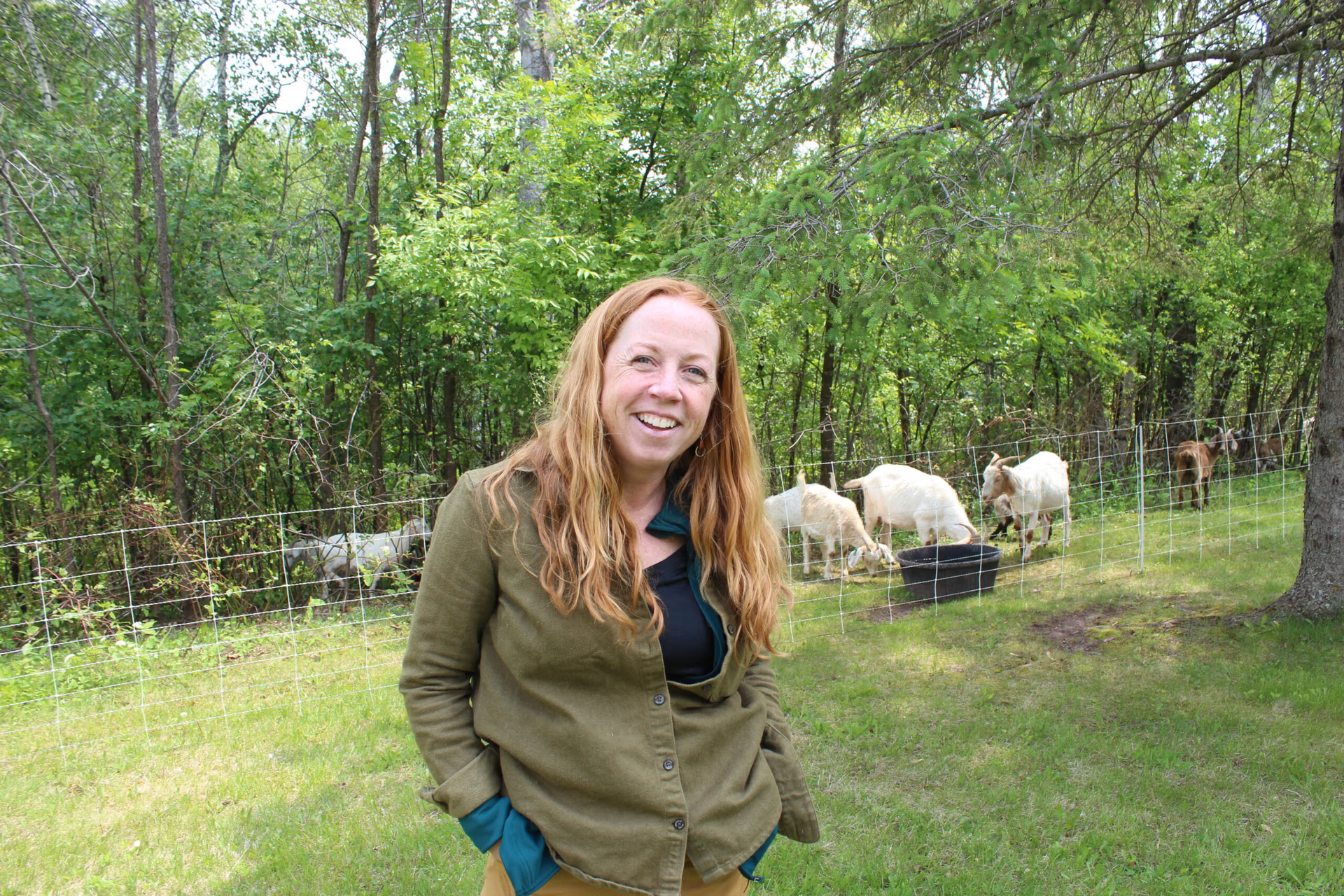
Among them are the owners Jake and Brigid Williams, their 15-month-old toddler, two farm hands, 70 goats, 30 sheep, six dogs, three cats, 70 turkeys, 30 laying hens, nine geese, a donkey and a horse.
One could be forgiven for thinking managing this 80-acre rolling farmland outside of Poplar would be nothing short of chaotic. However, the scene that greets visitors is extraordinarily tranquil, and its owners equally so.
Sasha, a herding dog Brigid describes as “pretty much a sheep with teeth,” lives with her flock in the pasture, curious and good-natured goats chew their cud, a rescue dog who answers to Joe Cool lounges on the lawn, and an abundant garden anchors the property.
The idyllic scene is a testament to the couple’s work ethic and determination.
“It all starts at around 6:30 a.m.,” Brigid noted. “And the work usually ends around dark, but we couldn’t do any of it without our farm hands who stay with us for free room and board and help us with all these chores.”
The goats and sheep, as well, earn their keep. As regenerative ruminants, the herd/flock (or flerd as the Williams call them) can be rented out for prescribed grazing, including brush clearing, pasture improvement and invasive species control.
“It is a natural alternative to herbicide that benefits soil and can increase biodiversity,” Jake explained.
The City of Superior recently rented 39 of the goats for buckthorn (an invasive species that spreads rapidly and disrupts the local ecosystem) removal in Billings Park. As luck will have it, goats love the stuff. City of Superior Parks, Recreation & Forestry Director Bridgit Maruska said the service was an effective, low-impact way to clear vegetation in tough to reach areas along the river.
“It also created a lot of positive public engagement,” she said. “People loved seeing the goats and they got the job done. We’re excited to have them back to keep up their good work.”
The idea of offering such a service came to the Williams when they began their farming journey in Washburn in 2017, after meeting each other at Northland College. They had just bought a former hunting cabin in the woods which was overgrown with buckthorn, tansy, reed canary grass and blackberry brambles.
They bought a few goats so they could make homemade goat cheese, but also to help manage the overgrowth.
It was immediately apparent to the couple that goats could be used as a tool in land management, so they expanded their menagerie and their farm footprint when they moved to Poplar. They now offer grazing services to Douglas County and the greater Duluth area.
On their own farm, they are focusing on reviving their dense clay soils for garden and orchard production. The Williams have chosen to pasture a variety of livestock species such as chickens, ducks and sheep to add organic matter and nutrients to the soil. They also provide a mineral buffet for the animals so they have access to minerals they are not getting from the pasture, and cycle them back into the land.
To get the grazing process started for clients, the team at Drifty Acres Farm visits their property to do a site assessment and determine their management goals and then design a restoration plan.
They then set up temporary solar-powered electric pens to contain the grazers while they munch their way through the offending invasive species. The team makes daily on-site visits to provide water, check on animals and monitor progress.
The Williams recommend re-grazing the same area multiple times in a season and some clients choose to set up a multi-year prescribed grazing plan.
While the goats are busy eating their way through, well, almost anything, the turkeys and lambs on the farm also serve a purpose, becoming part of harvest subscription boxes delivered to subscribers every other week from mid-October to mid- December. Last year the couple began working with two other small local farms to help fill out the boxes, Hoop Snake Farm in Brule and Berg Park Farm in South Range.
A full subscription box ($1,000) will get you 50 pounds of meat (pork, beef, lamb, goat and chicken), plus a selection of seasonal goodies (veggies, jams, honey, maple syrup, elderberry syrup and goat milk soap). Their Thanksgiving Box includes a whole turkey and the Christmas Box a leg of lamb.
A half subscription ($600) is available for smaller families. These include 25 pounds of meat, a whole turkey for Thanksgiving, and all of the seasonal goodies.
There is also an option for a weekly fresh-baked loaf of sour dough from Berg Park Farm for an additional $40. Boxes are available for pick-up on the farm in Poplar or they will deliver them to your door for an additional $10 a box.
While Both Brigid and Jake have regular jobs (she with Bayfield County and he in the hospitality industry), they continue to have big vision for their little farm.
“We have a lot of plans for our farm but know things take time and we are building things up step by step,” Jake said
As excited as they are to grow food for their community, they prioritize doing everything with as few chemicals and fossil fuels as possible and that takes time, patience and money.
They are hoping one day visitors can pick some fruit from their food forest, enjoy a picnic in their pasture and meet some precocious goats.
The pair also hope to Airbnb a few yurts on the property and eventually have a farm store onsite.
“We have a lot of dreams for the property,” Brigid said. “It’s a lot to manage and there is so much potential. We want to make sure we are doing things thoughtfully and creatively while still enjoying what we already have here.”
Drifty Acres itself was named with just that philosophy in mind. The name came not only from the heavy snow that drifts across the fields every winter, but also for the way the Williams plan to carry themselves and curate the acreage – “Never getting set in our way, always going with the flow, letting our animals and ecosystem guide us on the best way to grow food and build community.”
Holly Kelsey-Henry is a freelance writer who lives in northern Wisconsin.