Mission
Each year The Douglas County Land and Water Conservation Department partners with the Wisconsin DNR to secure a Clean Boats, Clean Waters (CBCW) grant. This is a streamlined Aquatic Invasive Species (AIS) grant through which staff conduct boat and trailer inspections and educate boaters on how to prevent the spread of AIS at boat landings.
Why AIS Prevention Matters
Invasive Species are nonindigenous species whose introduction causes or is likely to cause economic or environmental harm, or harm to human health. They commonly have a competitive advantage over native species because they do not have to contend with the natural predators, pathogens and pests that dwell in their native habitats. Once established, eradication of AIS is extremely difficult and often impossible due to management costs, impacts on non-target species and the resilient nature of many AIS.
Aquatic Invasive Species represent a severe threat to the short-term and long-term integrity of water resources in Douglas County. In fact, economic research shows that AIS cost the United States $120 billion per year (Pimentel et al., 2005) and AIS carried into the Great Lakes via ballast water cost the surrounding states $230 million per year (Rothlisberger et al., 2012).
Because of the negative impact on water quality, ecosystem services, recreational opportunities and angling, Wisconsin residents and water users consistently identify AIS as primary threat to their enjoyment and use of local waterways.
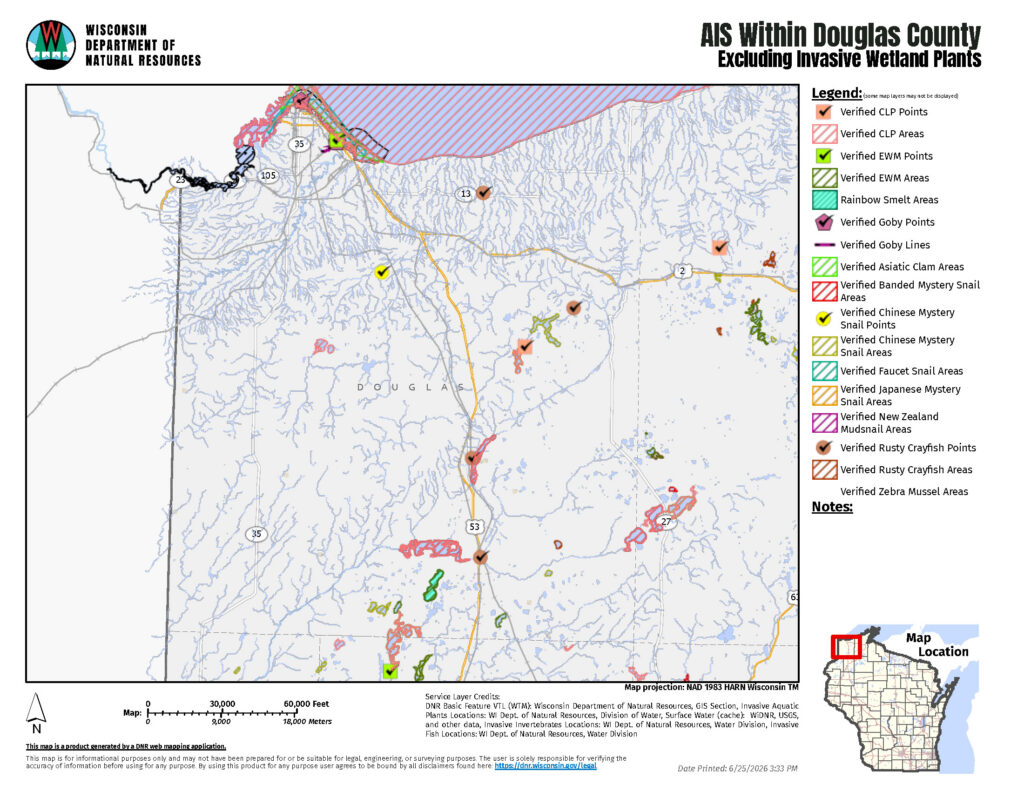
Currently, AIS infestations have been verified in 38 water bodies throughout Douglas County, demonstrating our serious economic and ecological stake in understanding and combatting AIS. Numerous water bodies remain free of AIS or have not had AIS infestations detected or verified yet.
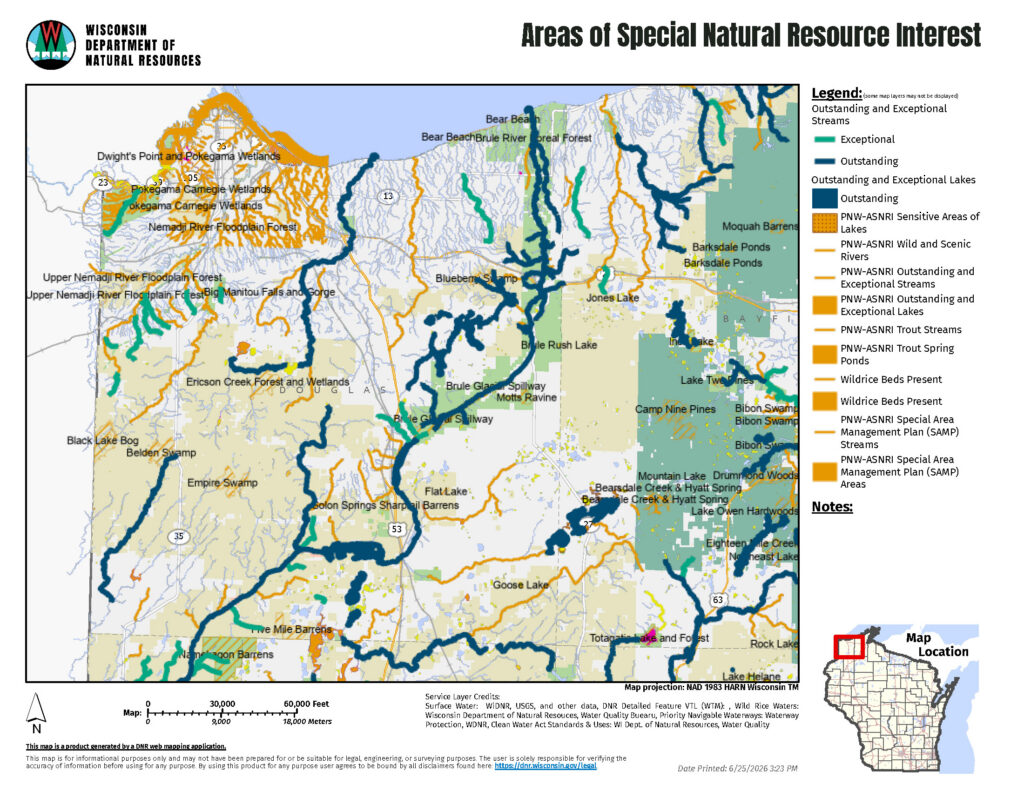
Douglas County also contains a high proportion of waterways classified by the WDNR as Areas of Special Natural Resource Interest (ASNRI) due to their high water quality and biodiversity. Waterbodies free of AIS and the ASNRI waterbodies represent high-quality resources held in the public trust for the people of Douglas County and visitors.
However, this resource is threatened by the possibility of invasion by harmful AIS from nearby infested waterways or from other AIS invasion pathways. In fact, most lakes in Douglas County are within 5 miles of a waterbody known to contain AIS.
About the Program
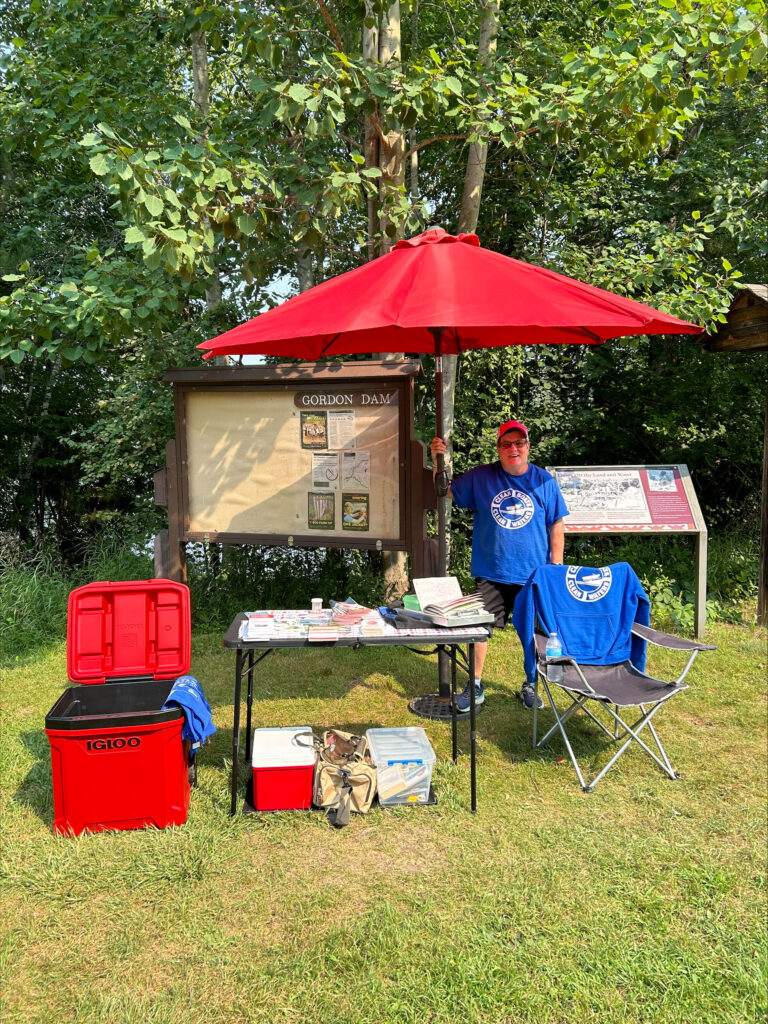
Lake associations, lake districts and other units of government also run CBCW programs within the county. The County Land and Water Conservation Department stepped in to implement a CBCW monitoring program at the Billings Park, Loon’s foot and Gordon St. Croix Flowage boat landings due to the high risk of spreading AIS from these locations to our many pristine inland lakes and the lack of a lake association or other entity to manage this important work.
Boat inspectors help perform boat and trailer checks, hand out informational brochures and educate boaters on how to prevent the spread of aquatic invasive species. You may have also seen our partner organization, The Northwoods Cooperative Weed Management Area’s seasonal staff, operating a boat wash on Saturdays at the Loon’s Foot Landing in Superior to help the public remove AIS from their boats and trailers.
Visitors to the landings where Douglas County has a CBCW program will also be familiar with the Surface Waters Program’s Stop Spiny cloths, a fun and useful tool to prevent the spread of AIS.
Inspection Results
During the 2025 season our two boat inspectors worked 400 hours, contacted 1,500 people and inspected 684 boats.
Inspectors will ask boaters questions about their recent travel between different water bodies. This helps us better assess the risk of AIS spread. While most boaters report not traveling to a different waterbody within the past five days prior to entering at one of our landings, the data shows people do travel significant distances, sometimes between states and between multiple waterbodies on the same day, which presents an opportunity for AIS spread.
The outreach and education our inspectors provide is absolutely critical to ensuring the long-term health of the places we love and preventing the spread of AIS to our many pristine waterbodies by equipping outdoor enthusiasts with the knowledge needed to recreate responsibly.
Resources
AIS related questions can be directed to the Douglas County Surface Waters Program Coordinator Zach Stewart, Douglas County Conservationist Elijah Hoffman or our Regional WDNR AIS Biologist Jamie VandenLangenberg.
Douglas County and the Wisconsin DNR provide training for aquatic invasive species inspectors who help educate boaters and inspect their boats for aquatic invasive species. If you are interested in this training, this page is a place to start.
- Clean Boats, Clean Waters (CBCW)
- Use Douglas County Information for Number of Boats Inspected
- Be sure to visit the UWEX Clean Boats, Clean Waters website [exit DNR] for the handbook, forms, publications, schedule of workshops and general information about Clean Boats, Clean Waters.
References
Pimentel D, Zuniga R, Morrison D. 2005. Update on the environmental and economic costs associated with alien-invasive species in the United States. Ecological Economics. 52(3):273-288
Rothlisberger JD, Finnoff DC, Cooke RM, Lodge DM. 2012. Ship-borne Nonindigenous Species Diminish Great Lakes Ecosystems Services. Ecosystems. 15(3):1-15.