Cruising atop Lake Superior in Michigan’s Upper Peninsula, Brian Maki was just west of Marquette. If you’re familiar with the area, it’s dominated by the blue-green splendor of the greatest lake and the surrounding wilderness.
On the water north of L’Anse, a tiny village that proudly doubles as the county seat of Baraga County, something caught Maki’s attention. The owner and CEO of Lakehead Constructors was near a peninsula. He drifted toward the spit of land jutting into Lake Superior for further inspection. Soon, he was looking up at a giant Ford water tower.
The iconic tower, a relic harking back to the region’s bustling past, was technically located in Pequaming, an unincorporated community — “ghost town” might be more fitting — in L’Anse Township. Henry Ford had purchased Pequaming in 1920 and set up a sawmill there to produce lumber used for roofs on his popular Model Ts.
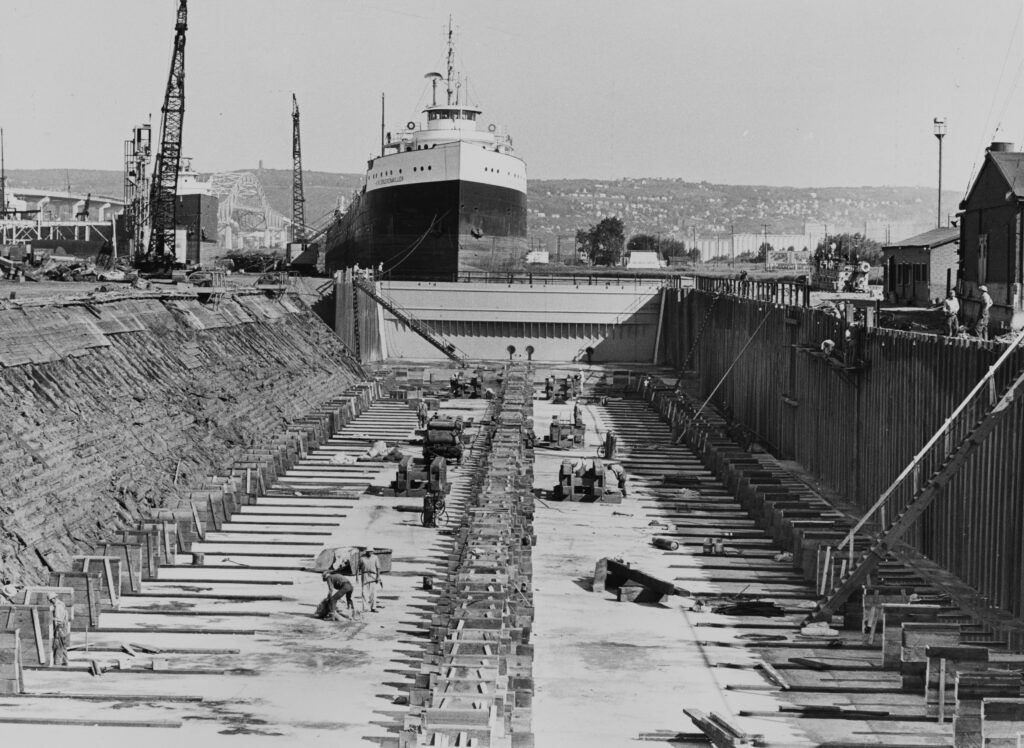
Unbeknownst to Maki at the time, he had just happened upon a site previously home to one of the largest — and first — projects in the irrepressible history of Lakehead, a massive dock for the Ford Motor Company in 1924. The project cost a whopping $8 million at the time, equivalent to more than $150 million today.
In 1916, when Roland C. Buck opened a small civil engineering firm in Superior, the Duluth-Superior harbor was one of the busiest ports in America. The waterfront was a hub of activity — shipping, grain, timber, ore, industry. And an upstart company was launching what would become more than a century of work helping to build, maintain and modernize the region’s industrial backbone and infrastructure.
In 2026, Lakehead Constructors is celebrating 110 years in business.
The company has changed names, expanded its footprint and evolved with the economy. Its roots, though, remain firmly planted in Superior.
Known as Lakehead Constructors, Inc., since 1955, when it transitioned from the R.C. Buck Company, it has grown from humble beginnings serving a busy Great Lakes port into a highly regarded, large-scale industrial general contractor with locations in Superior; Aurora, Minnesota; Marquette; and, as of 2025, St. Michael, Minnesota.
Today, Lakehead employs about 1,100 people overall, including 500 to 600 full-timers, and logs more than 1 million man hours annually. Its work spans mining, power generation, railroads, wastewater, solar energy, commercial construction and heavy industrial maintenance.
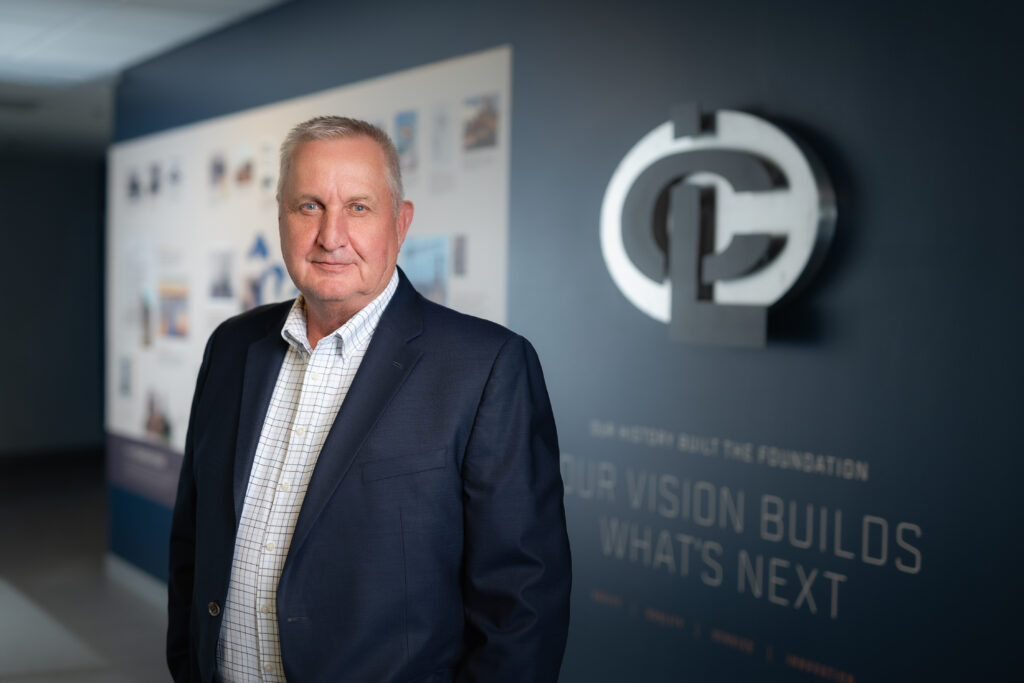
Lakehead Constructors CEO Brian Maki. Photo by Nate Rendulich
For Maki, the milestone is about more than longevity.
“I’m very proud of all the people here,” he says. “Our customers, many of them are long-term, and I like to think that we’ve grown with them. We’ve always been a company with a lot of integrity. We pride ourselves on quality service and our relationships.”
Those relationships are central to Lakehead’s story. Some stretch back decades. The company has worked with Duluth-based Compass Minerals since its earliest years and has long-standing ties with Iron Range mining companies and Minnesota Power. Lakehead also has purchased materials from Campbell Lumber and Supply since the 1940s — a testament to the importance placed on local relationships as well as customer partnerships.
“We understand how their operations work,” Maki says of the long-time, core customers. “Our crews, superintendents and foremen understand how these companies work and what’s important to them. Their priorities become our priorities. You become first cousins, I guess, in those relationships. They care about us, we care about them and we take care of each other.
“One of our presidents used to say, ‘We have to be great stewards of (our customers’) dollars.’ We provide exceptional service for our customers, or they wouldn’t be coming back.”
Seated across the table from Maki, Lakehead president Brian Hubbard agreed.
“What’s good for them is likely also good for us,” he says.
Big Reputation for Big Projects
That philosophy has helped Lakehead remain relevant through major shifts in the regional economy. Early on, the company was deeply tied to the waterfront, expanding docks, upgrading shipping terminals and maintaining industrial plants.
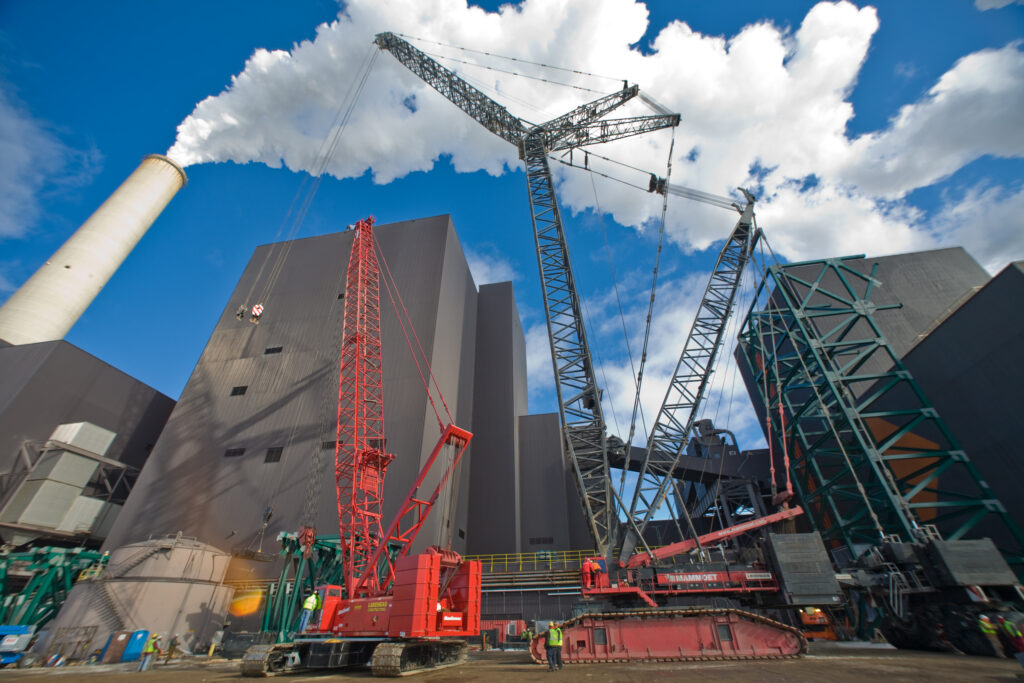
It diversified out of necessity. For proof of that, look no further than 2009. That’s when Lakehead completed another major project: a plant retrofit for Minnesota Power in Cohasset.
The Ford Motor Company dock and the $200 million project in Cohasset, completed 85 years apart, illustrate the company’s ability to evolve while continuing to serve the industrial needs of the Twin Ports and beyond.
“It’s a marvel to see where we started, what we’ve done and what we’ve morphed into,” says Maki, whose start with Lakehead came in 1991 when he joined its marketing department. “You don’t see us building any new grain elevators on the waterfront. That was something we built early on, so things change.”
Indeed, this pioneering community pillar has had a hand in some of the most notable and awe-inspiring projects in and around the Twin Ports. If you’ve lived in this area for any length of time, you’ve almost certainly been impacted by one of them — whether it’s a bridge, wastewater-treatment facility, new building, mining upgrades on the Iron Range or waterfront infrastructure.
Lakehead Constructors’ body of work is ubiquitous. Consider the following endeavors:
- The Mustang Project, a huge investment by Cleveland-Cliffs at its United Taconite mine in Forbes, Minnesota.
- Installing new utilities for the City of Virginia on the Thomas Rukavina Memorial Bridge during the relocation of U.S. Hwy 53.
- The Minnesota Slip Bridge rehabilitation in Canal Park.
- Expanding and relocating Amsoil’s synthetic oil-production plant, an undertaking that included setting more than 80 storage tanks, many of which had a capacity of 50,000-plus gallons.
- Transporting, hoisting and welding 52,000-pound jetways into place at Duluth International Airport.
- Installing sheeting during a large-scale environmental-improvement project for BNSF Railway.
- Leading major pipeline installations for Enbridge Energy.
Understandably, there is a swell of pride that surfaces when these projects are mentioned. That’s true for Maki and Hubbard, and it’s true for the engineers, managers and construction workers they lead, who can drive by some of these places and reflect on their role in building them, in moving communities forward.
“Every project stands out,” says Jeremy Uncini, Lakehead’s vice president of construction. “We take a lot of pride in the work we do, and I do personally as well. Especially as the years go by, it’s really cool to see something and be like, ‘Hey, we built that.’ It’s quite impressive what we’ve been able to do.”
The Mustang Project for Cleveland-Cliffs was especially meaningful for Hubbard. Production changes required new pellet capabilities in Minnesota after a mine closure in northern Michigan. The project came at a critical time for Lakehead and reinforced the company’s ability to respond to urgent industrial needs.
If it’s an out-of-the-ordinary project or something that needs a lot of brain and manpower quickly, “Lakehead has been the company to call,” Maki says. “We’re the people who can do it.”
However, having the people to do it requires a commitment to safety, to protecting the workforce. Indeed, when Maki and Hubbard were asked to name what they consider to be among the biggest changes they’ve witnessed for Lakehead and its business, they both latched onto a common theme. One of the biggest shifts they’ve seen industry-wide is the transformation in safety expectations. It’s become a defining part of the culture at Lakehead.
“The safety culture has changed dramatically,” Maki says. “People got hurt in the construction industry years ago, and many of them didn’t make it home. I’ve been around this industry for a long time. The focus on safety is intense, as it should be.”
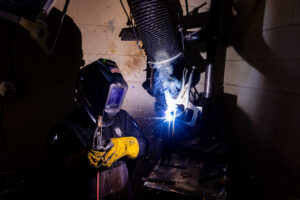
At Lakehead, safety is built into the daily rhythm of every job. It’s a focal point, a consistent discussion topic.
“It’s not lip service here,” Maki says. “People want to go home to their families every night.”
Uncini mentioned “focus Fridays,” in which the objective is to end the week just as strong as they started it. That demands staff to stay in the present, to remain engaged and avoid looking ahead to the weekend or the next project. That hasn’t always been the case throughout his career, Uncini says.
“Zero injury has been a huge focus since I started at Lakehead,” he explains. “It was kind of a new thing for me coming out of college, just because I had worked for some smaller contractors prior to then, where safety wasn’t talked about as much.
“We have a great culture that really integrates safety into everything we do here at Lakehead. It’s very impressive and very necessary.”
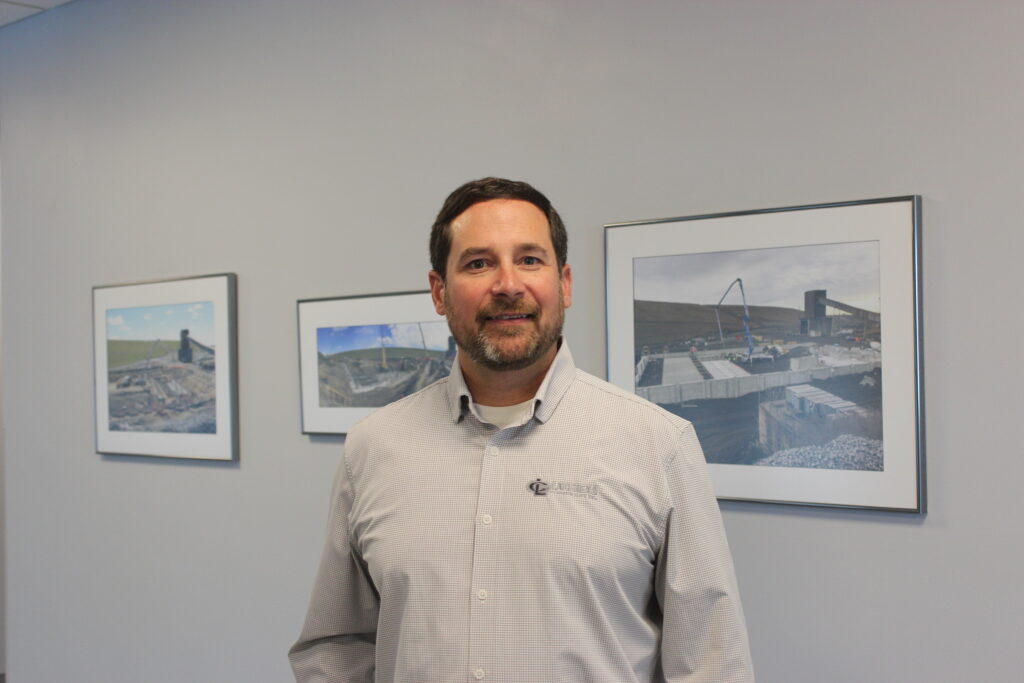
Lakehead Constructors President Brian Hubbard.
Changing With the Times
In the 1980s, when industrial construction slowed right along with the economy, Lakehead moved toward commercial construction, winning bids on high-profile projects in Duluth for the Holiday Inn hotel, St. Luke’s and St. Mary’s hospitals and the Technology Village business center.
That willingness to adapt has been pivotal. And it’s precisely why Lakehead is still thriving 110 years after Mr. Buck got things started. The founder was instrumental in bringing iconic landmarks to life. He engineered and built Superior’s Androy Hotel, and also engineered and co-owned the Arrowhead Bridge that connected the Billings Park neighborhood with West Duluth.
An excerpt from a retrospective developed by Lakehead, to commemorate 110 years of success, reads: “While Buck is best remembered for these high-profile projects, he also valued smaller projects that strengthened civic life. He counted churches, schools and fraternal organizations among his clients. This blend of industrial and civic work would become a defining characteristic of Lakehead: serving complex, large-scale clients while remaining deeply rooted in the communities where we live and work.”
Community roots, civic pride and an affinity for branching out — sound familiar?
“We’re diversifying; we’re growing this thing out,” Maki says. “There was a time when 65% of our work was with the mining companies, 20% was with the power company and 5% was with the railroads. We’ve had to diversify, and we’ve done a pretty good job of it.”
Diversification continues today. Lakehead has moved into wastewater work and utility-scale solar, partnering with Duluth-headquartered Hunt Electric on major projects, including Minnesota Power solar fields in Cohasset and Royalton.
“For me, it shows how we’re diversifying,” Maki says.
Hubbard sees that as part of the broader energy transition happening across the country.
“We’re transitioning with some of these core customers,” Hubbard said. “My role as president is to ensure this can continue to grow for the next 100 years.”
Hubbard knows Lakehead’s work from the ground up. Before becoming president, he served as executive vice president of construction and spent more than a decade as a project manager, leading major capital projects, plant expansions, maintenance accounts, outages and commercial work. He recounts the Cohasset retrofit as critical because it came during a period when the broader economy was struggling and local projects were scarce. The upgrade supported hundreds of good-paying jobs amid financial challenges.
“That was really significant for Lakehead,” Hubbard says. “We’ve been able to find local projects here in the region during some tough economic times.”
Being nimble and responsive to fluid industry trends, environmental regulations and local needs depends on Lakehead having a skilled, reliable workforce and a sturdy relationship with organized labor. Lakehead is a union contractor, and Maki describes successful projects as “three-legged stools” involving the owner, contractor and labor.
“We need everybody pulling the same way on projects,” he says. “We’ve always taken care of people that work here, and that’s noted by the unions. If you ask any of the union guys, they’d tell you that Lakehead is top-notch.”
Remembering the Past, Looking to the Future
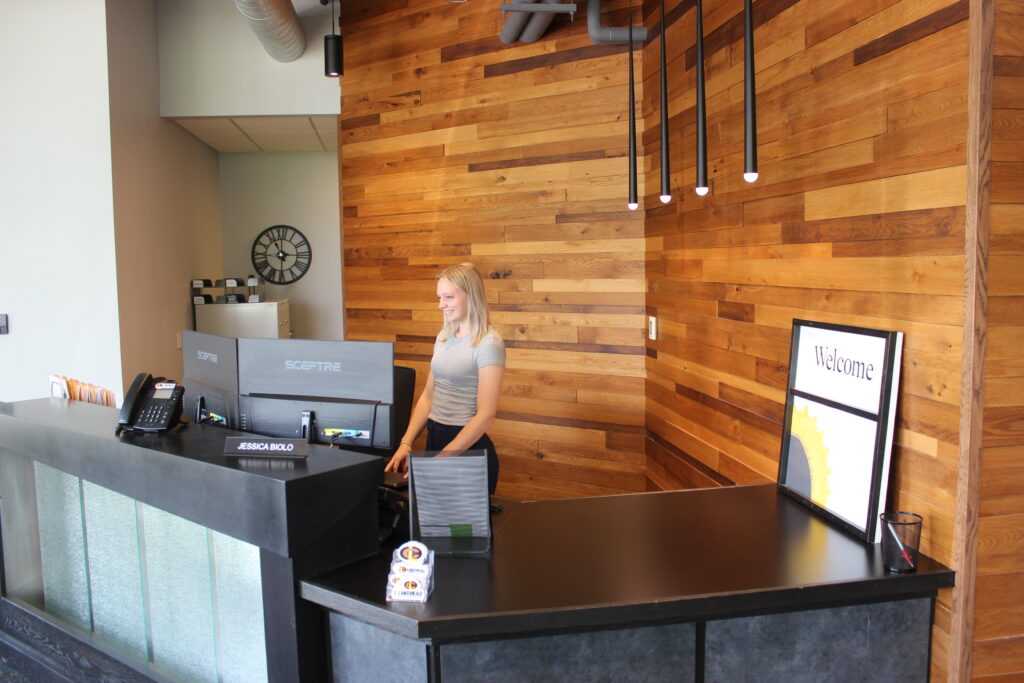
Inside Lakehead’s Superior headquarters, the company has spent more than a year digging through its own archives, uncovering photographs, records and stories that now help tell its history through a new office history wall. The effort has brought renewed appreciation for the company’s deep regional presence — and the people who have shaped it.
The ever-present office mascot — Major, a German Shepherd — certainly deserves some credit for the good vibes as well.
For Hubbard, part of the pride comes from living in Superior and seeing Lakehead’s work throughout the community he lives in.
“There are things around town that I get to see all the time,” he says. “My kids know I was a part of them. And that’s true sometimes when we travel, up the North Shore, through Silver Bay. When my family is along, being able to tell that story, that Lakehead was a part of it, it’s pretty special.”
Hubbard and Maki agree that the variety of work is a big part of what keeps employees engaged.
“We do so many different things,” Hubbard says. “Our employees love it because it’s never boring. Our people aren’t just doing one task. It creates a lot of balance for our employees.
“If you’re in the world of construction, there are people who just tie rebar. For 30 years, they’re bent over tying rebar. We do a little bit of everything. Our people aren’t just doing one task. They like that.”
Looking ahead, Lakehead’s leaders see both opportunity and challenges. Workforce shortages remain a concern, though Maki says Lakehead has been more fortunate than many because of its relationships and reputation. Regional growth is another key issue.
“We need a robust, steady economy in this region in order to sustain everybody,” Maki says.
Hubbard agrees. Growth creates demand for workers, but jobs are also what keep people in the region.
“We need people; we need jobs,” he admits.
After 110 years, Lakehead’s leaders believe the company’s future will be built on the same foundation as its past: strong relationships, quality work, community commitment and the ability to adapt.
“I think it’s being part of something,” Hubbard says. “Continuing to grow and be a part of the region is a testament to this company. Continuing to persevere in this world of consolidation — it’s pretty neat to still be here after 110 years.”
Maki puts it simply.
“I’ve always said that Brian and I are just coaching a great team,” he says. “There’s a lot of pride in our workforce.”
The look-back magazine Lakehead published this past spring ends thusly:
“From its beginning servicing a busy Great Lakes port to today’s work as a full-service contractor servicing a wide range of industries, Lakehead Constructors has spent 110 years evolving alongside the businesses it serves. Our history mirrors America’s history — and highlights the importance of adapting while staying grounded in craftsmanship, relationships and reliability.”
Louie St. George III is a Duluth-based freelance writer.