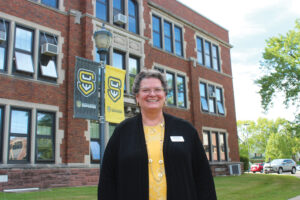
This summer, the City of Superior continues celebrating the 130th anniversary of the launching of the whaleback steamer Frank Rockefeller, known today as the museum ship Meteor. This past May 16 was the grand opening day, replete with cake, new exhibits and the ship’s bar open to the public, ready for another season.
The Meteor annually outdraws the city’s other historic sites, but, as with any attraction, interest wanes and upkeep is expensive, even when supplemented with volunteer labor. So, how does the City of Superior balance the history of the Meteor with plans for its future?
“How do you continue to make these spaces relevant? That’s the million-dollar question,” reiterates Jess McCullough, the first Museum Director for the newly minted Superior Historic Properties, a division of the Public Works Department. “One of the things I have in mind for all three of our sites here is to utilize them for things that go beyond the tour.”
McCullough, hired in January 2026, recalled that his first exposure with the Meteor was working as a tour guide in 2007-08. Today, he sees the vessel, and the city’s other historic sites, from a different lens. He says one of the short-term goals of the Superior Historic Properties team is “to try and foster a sense of community ownership.”
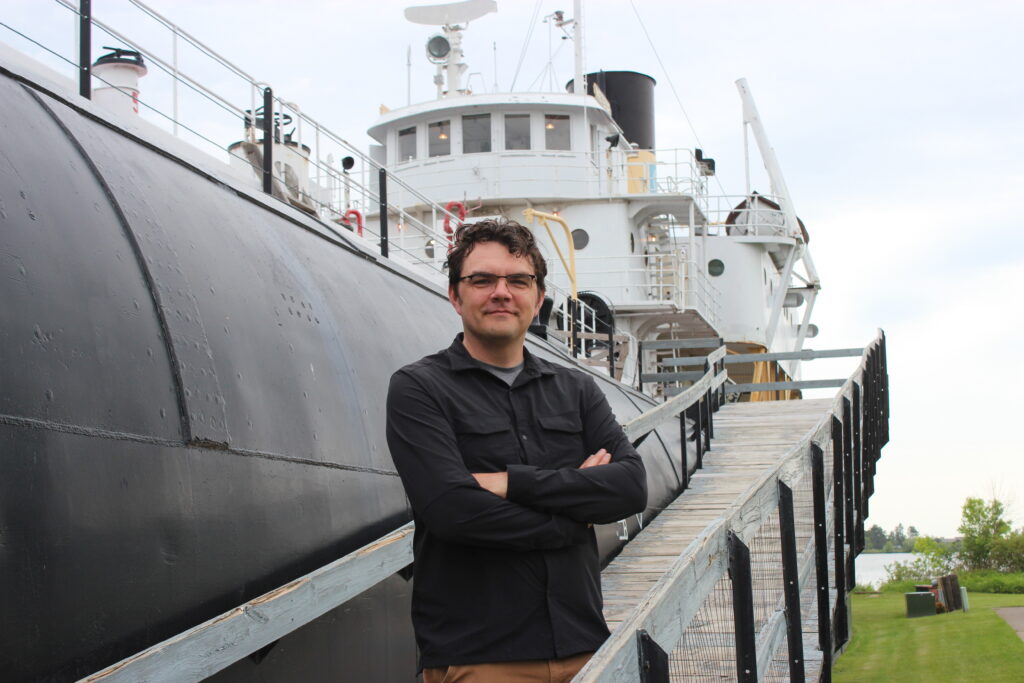
Jess McCullough, the first Museum Director for the newly minted Superior Historic Properties.
As public spaces, they want people to feel a connection with them. “When you have a museum like the Meteor in town, if you live around here, for instance, you go and see the Meteor, or you go on a school field trip and that’s fun, but how many times afterward are you going to go back and take the tour?”
These experiences help form a bond between the Meteor as a historic maritime link within the community that now span several generations.
McCullough will tell you there is no shortage of ideas. “One of the things we are working on here, in collaboration with Parks and Recreation and a couple other groups in the city, is to determine what sort of great new programming we can bring to the Meteor,” says McCullough. “The acoustics in there are incredible, so we’re talking about hosting music, having concerts in or on the Meteor.”
Other ideas include movie nights, organizing specialty event spaces, where you could host a groom’s dinner or something in the officers’ mess, for instance. “I would like to see it used more as a large venue for citywide programs and projects, so we’re working on pulling some stuff like that together as well.”
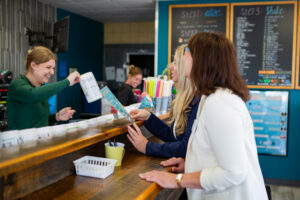
An attraction that has grown in popularity is the bar located inside the ship. Installed in 1972, the bar is located on the first floor, way back aft (the rear of the ship) next to the boiler room. It’s combination of steel, dark wood paneling and a bar salvaged from an old North 3rd Street saloon. The low, moody lighting captures the feel of being on a sea voyage narrated by Jack London.
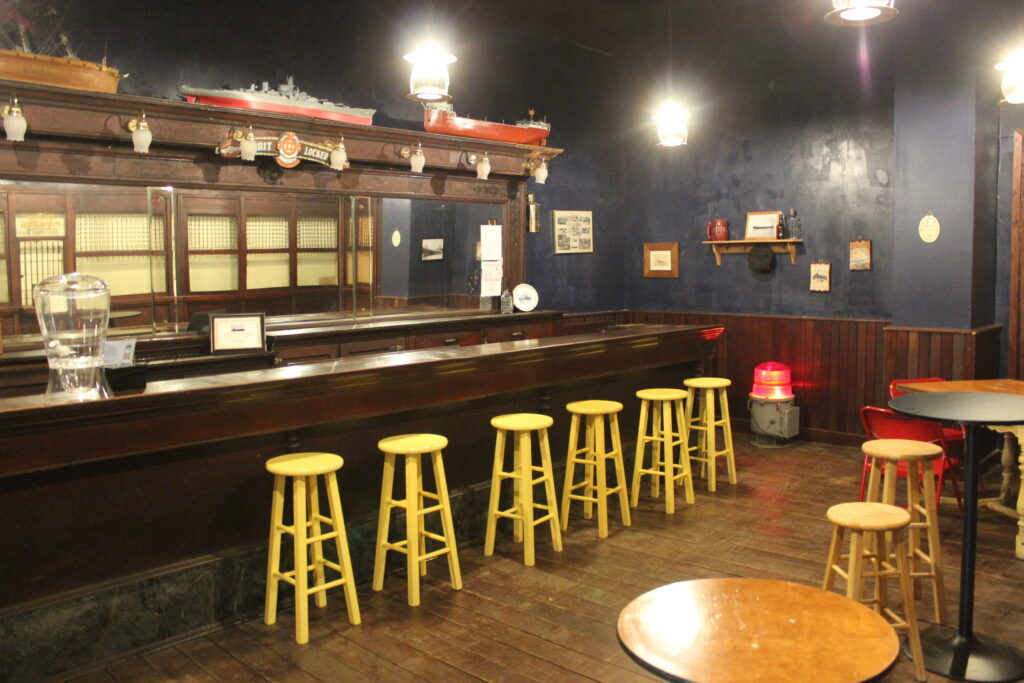
The actual existence of the bar has been shrouded in mystery for years.
“We are working on reopening the ship’s bar. This space was put in when the Meteor was brought here as a revenue-generating stream, and it was never really opened.”
Sound intriguing? The space is available for rent for private parties and private functions and events.
In addition, McCullough’s team is working on turning the bar into a pop-up-speakeasy where you can come in for a drink, meet up with your friends and enjoy a unique setting. Once all the permitting and licensing is in order it will be a fun space for socializing.
“The idea would be to start it off as an occasional thing, maybe once or twice a month, and if it’s successful, continue to operate it, and maybe increase the amount of time that we can do that. There’s still some stuff to figure out logistically, but we’re hoping to have that open this summer.”
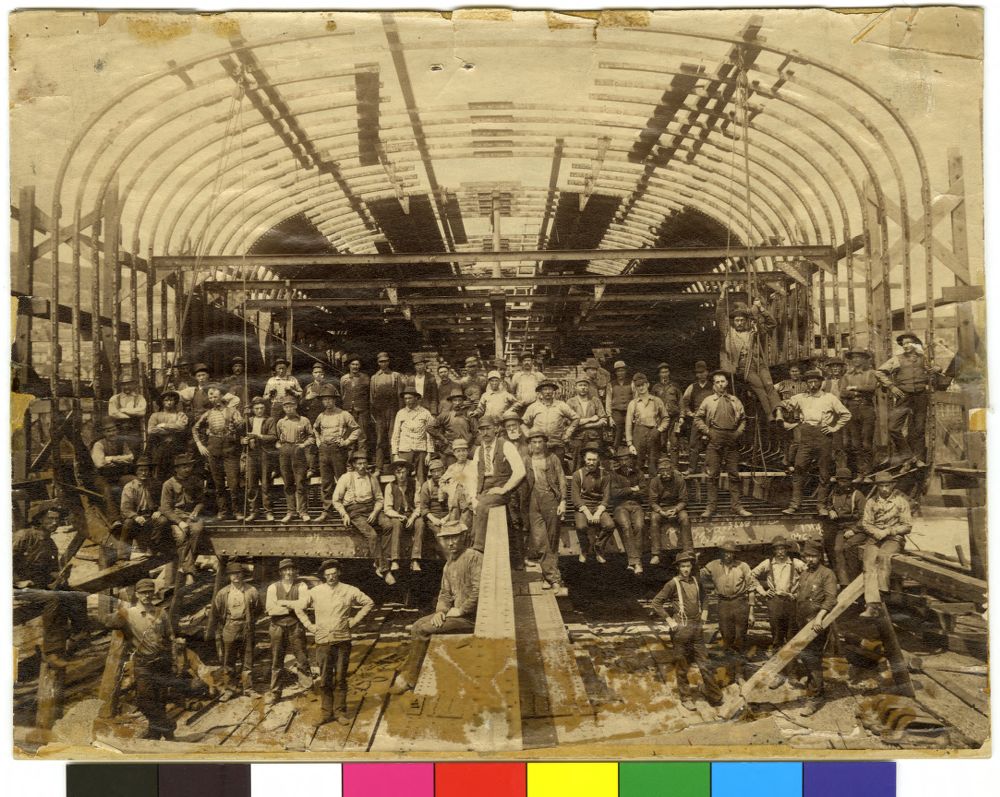
Laborers in whaleback under construction. University of Minnesota Duluth, Kathryn A. Martin Library, University Archives.
Vessel History
Historically, most of us know the big picture story of the Meteor. It’s the last surviving whaleback steamship, anywhere. It was the 36th of 44 whalebacks built between 1888 and 1898.
The day of the launch, April 25, 1896, brought a larger than usual crowd of spectators to the American Steel Barge Company shipyard. An estimated 5,000 people came for the launch; many to catch a glimpse of the dignitaries, like the vessel’s namesake Frank Rockefeller (he didn’t attend), company president Colgate Hoyt and local hero/whaleback inventor “The Captain” Alexander McDougall.
As launchings go, it didn’t go off without a hitch. Side-launching a vessel into the water required careful planning and execution.
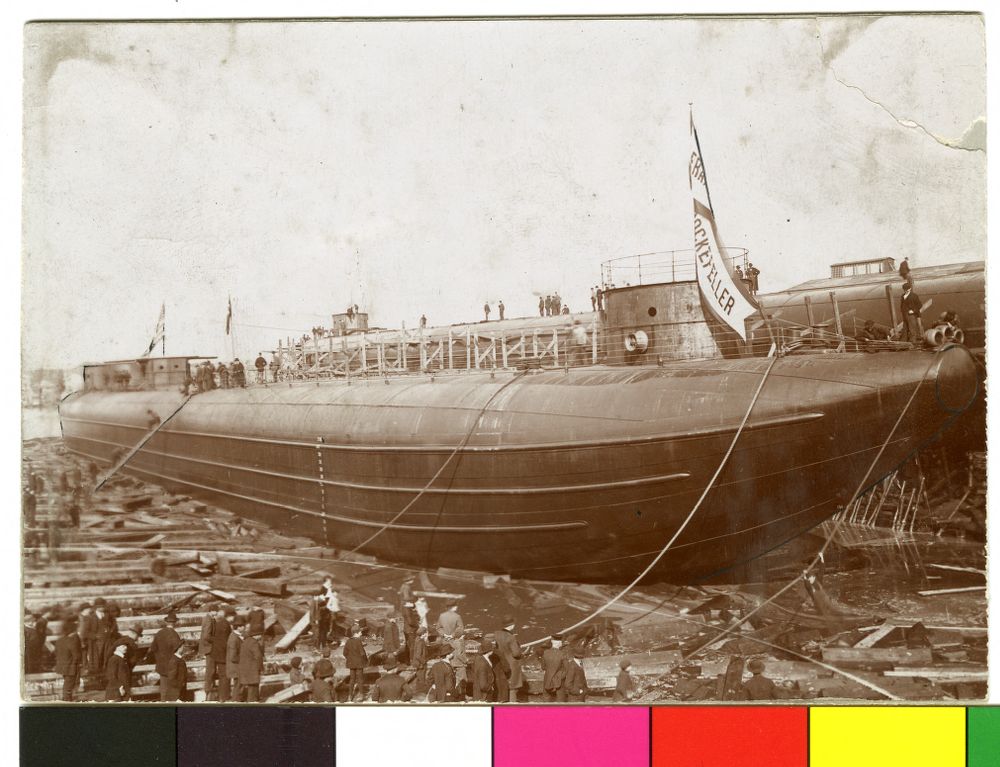
Launch day for the Frank Rockefeller. University of Minnesota Duluth, Kathryn A. Martin Library, University Archives.
“When the monster struck the water an exciting scene was enacted by the spectators on the dock,” noted a reporter in the Superior section of the Duluth News Tribune. “The boat swayed to and fro two or three times and then suddenly plunged forward. There was a mighty splash as the craft settled back into the slip followed by a rush of water over the dock and into the shed… the shed roof was struck by the whaleback’s bow and a crash followed which gave the impression to the excited people below that something serious had happened; but the damage was slight, only a small portion of the roof having been broken.”
As a ship, the Frank Rockefeller led a productive and charmed life. The vessel left the shipyard on June 3, 1896, to load its first cargo of Mesabi ore. Built for a little less than $183,000, the vessel was involved in a few major incidents, the first of which occurred in 1905 when the Rockefeller was put aground during a storm along Isle Royale.
Blinded by a November snow squall, the Frank Rockefeller ran onto the rocks at Rainbow Cove, while its tow consort, the Maida, crashed unabated into its stern, crippling the vessel. The Rockefeller was eventually towed back to Superior for repairs, where a new after-end was fabricated and refitted.
In late 1927 the Frank Rockefeller was sold by the Pittsburgh Steamship Company to Central Dredging. Renamed the South Park, the whaleback was adapted to carry sand and gravel. In 1936 the South Park was sold again, this time modified to transport automobiles from Detroit to ports on Lake Michigan.
Following a second major grounding in 1942, the South Park was sold to Cleveland Tankers, Inc. and converted to a liquid bulk tanker in Manitowoc, Wisconsin. A fully loaded and renamed Meteor carried about 40,000 barrels of bulk liquids. The vessel remained in active service for Cleveland Tankers until late 1969, when another grounding incident put an end to the tanker’s active life.
As for the McDougall family, there are still several descendants of “The Captain” living in the area. Alexander and Emmeline McDougall were parents to six children. Amnicon Lake resident Wendy Hack and her two brothers Alexander Castle Jr., and Lewis Castle are the great-grandchildren of Alexander McDougall. Hack’s grandparents were Duluth banker Lewis Gould Castle and Emelyn McDougall, the shipbuilding magnate’s youngest daughter.
A prized possession of Hack’s is a copy of McDougall’s autobiography. Dictated before his death, McDougall’s autobiography was published in a small quantity in 1932 by Alexander Miller McDougall and Lewis Castle.
“My dad gave each of us the original book and covered it with the McDougal plaid; gave it to us as gifts.”
Through the years Hack has kept her eye on the Meteor, participating in past fundraising events. She fears that new generations of Superiorites won’t know and appreciate her family’s contribution to the city’s maritime heritage or the Meteor’s history.
Hack’s grandfather, Lewis G. Castle, in addition to his involvement in the banking industry, was the local chairman of the executive committee of the Great Lake-St. Lawrence Association advocating for the building of the Seaway. Castle was appointed as Administrator of the St. Lawrence Seaway Development Corporation of the United States by President Eisenhower. A historical marker noting his contribution was placed at Canal Park in 1959.
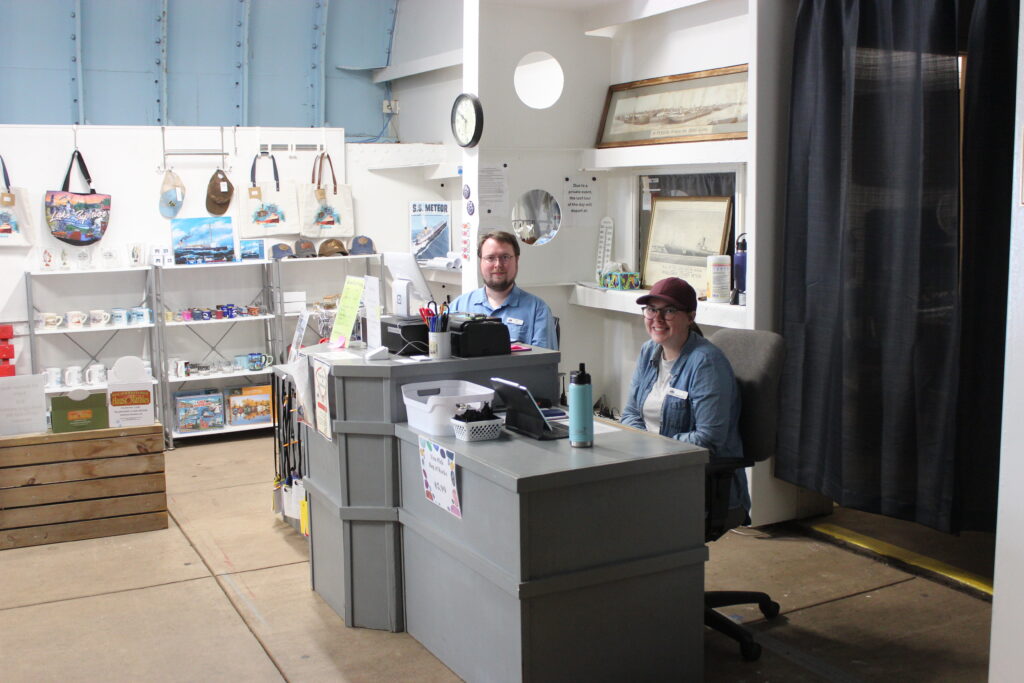
Volunteers Help Create A Unique Visitor Experience
The grassroots effort to bring the Meteor back to Superior in the early 1970s was led by local photographer and maritime booster Harold Andresen. Representing the Ship Acquisition Committee, Andresen was supported by John Wedow, president of Cleveland Tankers, whose company donated the vessel rather than sell it for scrap. In August, 1972 the vessel was officially signed over to the City of Superior.
Getting the Meteor back home to Superior sparked a community-based grassroots effort to raise the funds to pay for the tow. Today we would use social media to crowdsource, but in 1972 the big-ticket item was the “Bring Back the Whaleback” button sold throughout the Northland.
On September 11, 1972, the Meteor passed through the Superior entry, home from its final voyage. That same civic spirit carries on today in the annual spring clean-up of the Meteor.
“For the last 20 some years, getting it ready to open for the summer has been a weekend volunteer job coordinated by a nonprofit, sort of throughout the Great Lakes region. This year we opened it up to city volunteers and got a great response. We got a lot done,” says the new director McCullough. In 1974 the vessel was placed on the National Register of Historic Places.
Inside, the Meteor is a time capsule, with exhibits, photographs and ephemera from Superior and all around the Great Lakes. McCullough says education is an underlying part of any visitor experience.
As they wait for their tour, visitors can experience life aboard a whaleback by viewing video clips curated from film reels taken on the Meteor in the late ‘50s and early ‘60s, near the end of its operational life. There is also no better place to see an exhibit about the fate of the whalebacks than in the belly of the Meteor, the last surviving whaleback.
“We’ve got an exhibit about the fate of the whalebacks… there are a lot of them at the bottom of the lakes and the oceans, including the Thomas Wilson, which sank right outside of the Duluth harbor,” McCullough explains. “We have in our shipwreck display a big projection of a dive that was conducted on the Thomas Wilson, so you can see features of it down at the bottom of the lake, and just sort of get a firsthand look at that as well.”
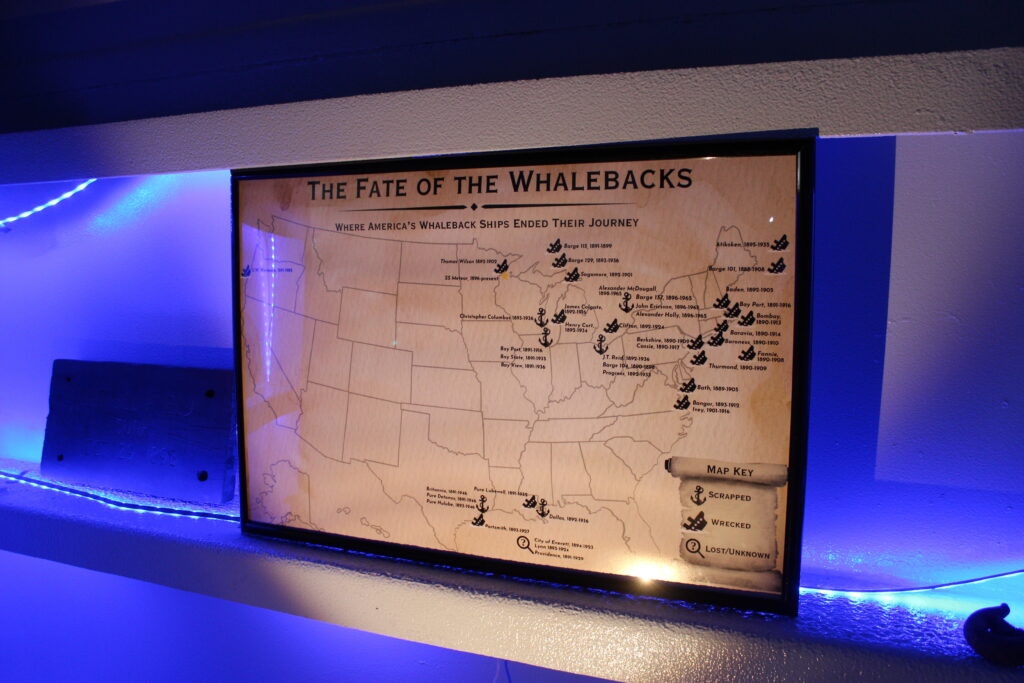
The exhibits supplement areas of the tour that may be difficult for people with mobility issues to access.
“There are a lot of steep stairs, narrow hallways. We try to make it as accessible as possible, but there are some spaces where you just can’t go, so we want to make sure that we have an experience that people can take a virtual tour if they want to.”
General tours take visitors through the major parts of the ship, the cargo hold, the pilot house, radio room, galley, crew quarters and parts of the engine room. Several tour packages are offered throughout the tourist season.
For maritime enthusiasts and steam geeks, McCullough says they’re incorporating new specialty tours. “This summer there will be some specialty engine room tours where you can go in and see the engine get fired up and actually run. We have a few folks who work for us and volunteer for us who are sailors or retired Great Lakes sailors. One of them worked on the exact same engine on a different boat,” explained McCullough. “He started the project of getting that engine working again, and so we’re gonna have specialized tours where you can go in and see the triple expansion engine in motion. It’s essentially a personal tour,” teases McCullough.
McCullough is looking forward to the challenge of operating Superior’s historic sites. Along the way to this new role, he earned a degree in history at the College of St. Scholastica, a Master’s degree in history at Marquette University in Milwaukee, and a doctorate in archaeology through the University of Leicester in 2017.
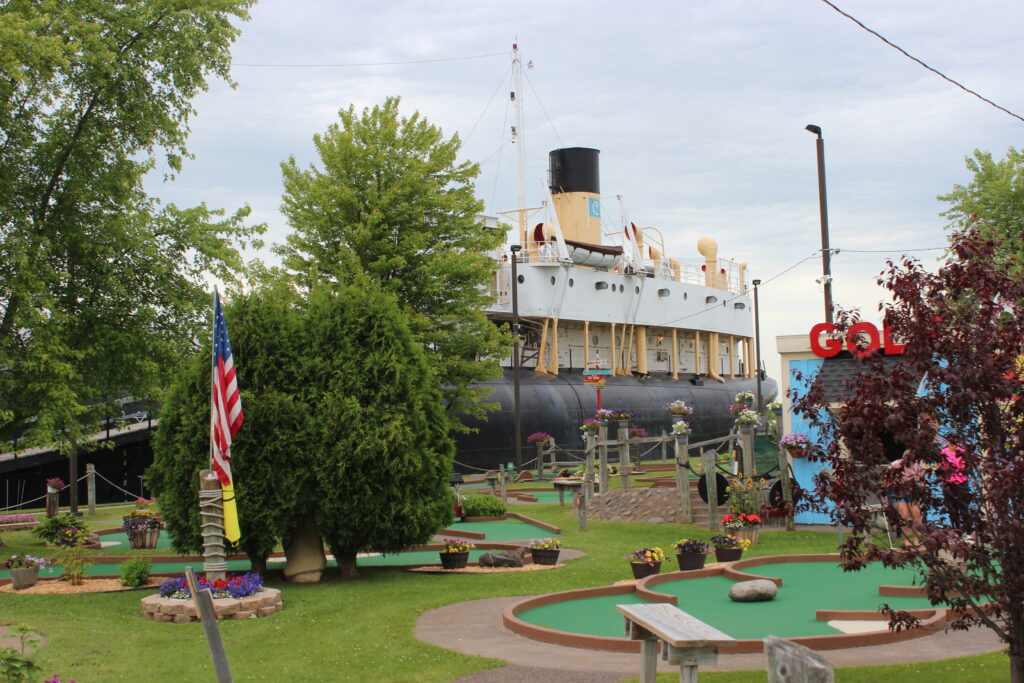
One opportunity McCullough sees is linking the Meteor, as a historic steamship, with the rest of the world. “There is another Victorian steamship called the SS Robin in London. It’s the only other intact steamship out there that I’m aware of. It’s smaller than the Meteor, but they put it on its own barge and floated that in the Thames,” says McCullough. “I would like to exchange some information with the SS Robin, so that we can have a little (display) panel about them, and they can have a little panel about us.”
Casting a wide net for connections is “part of the fun of the job,” says the city’s Historic Properties director. “Part of the long-term success of museums like this is to spread that love, to get people to invest in them. To see their story represented, to feel a sense of ownership and a sense of place, and that is kind of our overarching philosophy when it comes to developing programming,” concludes McCullough.
Whether the small, two-hour group tour of the engine room piqued your interest, or the general boilerplate tour better suits your family, the staff at the Superior Historic Sites encourage you to visit the Meteor, use your social media platforms to share your experience and spread the word – there are few ships in existence as unique as the Meteor. Reconnect to a part of Superior’s history as you tour the world’s only remaining whaleback steamship.
Patrick Lapinski is a freelance writer who grew up in Superior.