Nonprofit Tamarack Health Bucks Trend with New Superior Clinic
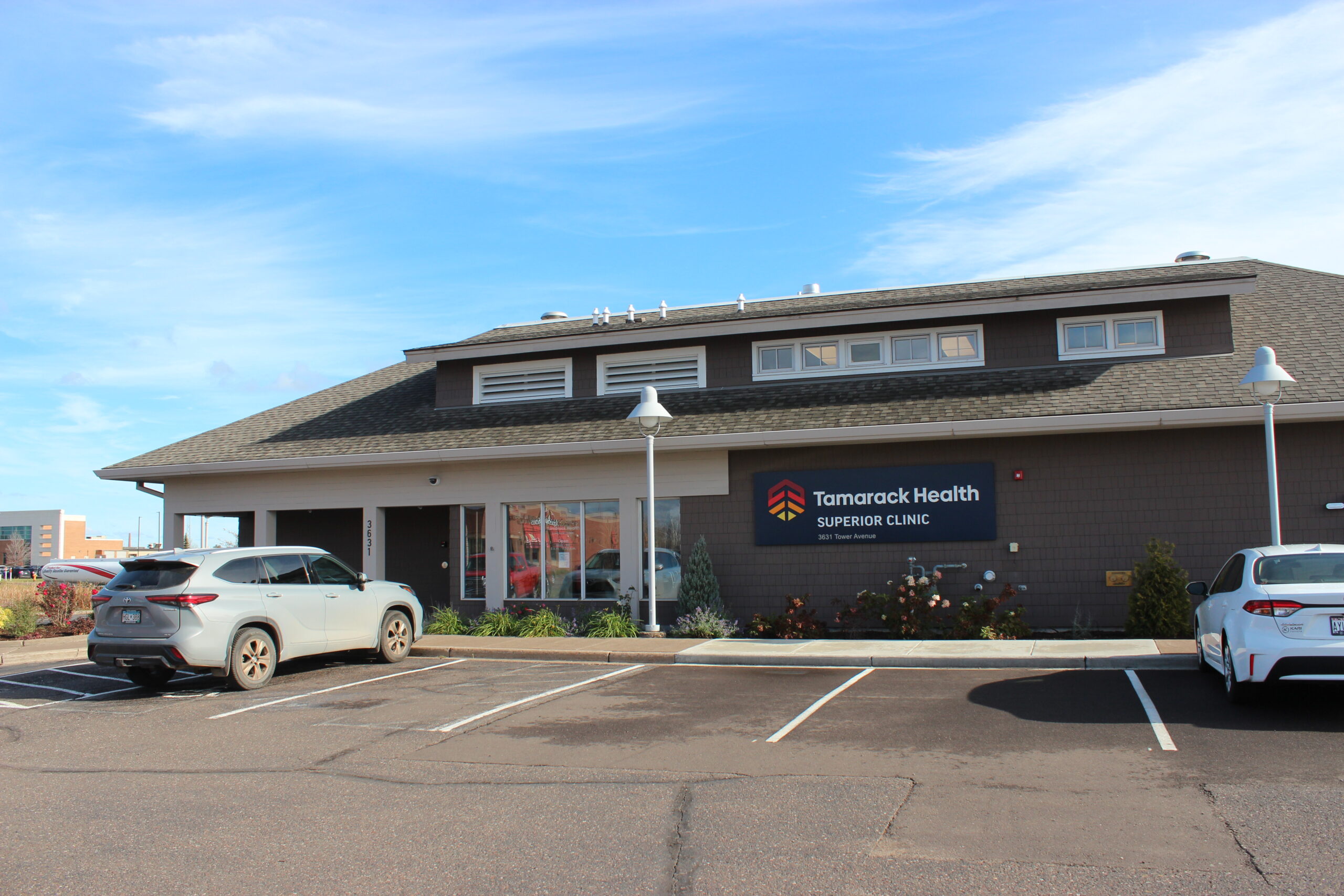
Independent and locally led Tamarack Health have expanded their base of health care services to include a new outreach clinic in Superior. Crossing the threshold of the Tamarack Health Superior Clinic opens the door to the health care provider’s offerings of pre-and post-op orthopedic, urologic and general surgery care, as well as pain management.
For those unfamiliar, Tamarack Health is the newly branded name for two of northern Wisconsin’s largest medical facilities, Ashland Memorial Medical Center (MMC) and Hayward Area Memorial Hospital (HAMH).
The rebranding had been in the works for several years “to better align the two medical centers under one health system name,” The Superior outreach clinic, located at 3631 Tower Avenue, is also intended to provide immediate service to a largely untapped patient demographic while decreasing travel for existing patients seeing specialists in Ashland and Hayward.
Tamarack Health is a private, nonprofit health care organization serving the medical needs of Northwestern Wisconsin whose mission is to improve the health and well-being of the people in the region. Their facilities include two critical access hospitals with full-spectrum specialty and primary care, Ashland Medical Center, Hayward Medical Center, and outreach clinics at Superior and Cable. Tamarack Health focuses on patient-centered care with more than 1,100 employees and 150 physicians and care providers.
The expansion of Tamarack Health into Superior deviates from many large health organizations wherein it’s common to have for-profit corporate hospitals in metropolitan centers extending their tentacles to small, outlier communities with satellite clinics. Tamarack reverses that trend with their outreach from smaller cities into the Twin Ports market.
Recognizing the need for centralized and shared values, mission and facilities, the administrative team at Tamarack strive to be “independent, locally-led, with local governance and decision-making through a board of directors who live and work in the communities.” It is this philosophy that attracted a number of leading specialists to leave their respective corporate-led hospitals to practice their trade in Ashland and Hayward. One of the first to sign on in 2011 was Dr. Joseph Signorelli, MD, Orthopedic Surgeon and Joint Replacement Specialist.
Born and raised in Duluth, Signorelli returned in 2011 after practicing on the East Coast, interviewing with three ortho groups in town at the time.
“Essentia was the option that kind of fit my practice needs the most. I did a fellowship in joint replacement. My whole career has been in hip and knee replacement. I was kind of the first person in northern Minnesota to just specialize in joint replacement, and we were essentially the only group that really had any sub specialization within orthopedics. I worked there for seven years, when a handful of us within the department realized there were some major shortcomings in what we were seeing as the new trend in corporate medicine.”
That new trend includes a focus on collaborative relationships between hospital administrators, physicians and patients. After seven years at Essentia, it was time for a change.
“I met with the administration of what was MMC (Ashland Memorial Medical Center) at the time, to lay out a plan for what I thought was the best way to deliver orthopedic care,” says Dr. Signorelli.
Unsure of what to expect, Dr. Signorelli said he wrote “sort of a long manifesto” of what he thought would be the best way to deliver joint replacement care in the region that included the kind of the resources that would be needed from the hospital, and the benefits to the community and the patients.
“Somewhat to my surprise, we were very much aligned in terms of values with what they were looking for.” Signorelli admits it was an eye-opening experience. “It was very clear right off the bat they were only used to and only looking for more of a collaborative relationship. That was in 2018, and clearly the best decision I’ve made in medicine is the transition over to what is now Tamarack Health.”
Orthopedics is a rapidly growing area of health care in the United States. The emergence of the baby boomers trying to maintain an active lifestyle is one of the reasons that joint replacement has a growing demand. On the flip side of that is what Dr. Signorelli describes as a deterioration in the overall general health of Americans. “The combined diagnoses of hip and knee replacement together are the single biggest line item on the Medicare balance sheet. Close to a million joint replacements are done in the United States a year.”
One of the values that attracted Dr. Signorelli to Tamarack is their “shared interest in improving overall patient care, kind of on a population basis, rather than on the individual patient that’s sitting in front of you.”
Signorelli says it’s one of the big themes through the whole hospital, particularly in orthopedics. “We’re there to help people, both non-surgically and surgically, to improve the general care of the of the patient, from a preventative standpoint. The hospital has been very much behind us in our charge to spearhead a movement for healthier patients overall; the general concepts you still see in a lot of European countries of getting out and being active and building daily activity into your daily life, getting back to a more traditional diet of non-processed foods, the appropriate foods in the appropriate quantities,” explains Dr. Signorelli. “Being accountable for our own health seems so simple, but is still unbelievably important, and something that we’ve just gotten away from.”
As an orthopedic surgeon, Dr. Signorelli divides his time equally between Ashland and Hayward, where the surgeries are performed, and Superior and Cable clinics, where pre- and post-op visits occur. The opening of the clinic in Superior also recognized the need to provide services to patients who wanted to avoid the stresses of navigating a larger hospital system.
Dr. Signorelli is passionate about providing a high level of care without all the obstacles and distractions, a theme he repeatedly heard doing outreach in Northern Minnesota when practicing out of Duluth.
“About half of our Ashland patients were coming from the Duluth area or north and so we said, ‘Well, it makes a lot more sense to have a clinic available in the Twin Ports area’,” he said about the opening of the Superior clinic. “I think everybody who has left one of the big hospitals to join us would say the same thing, we feel an obligation and a debt of gratitude to Northwest Wisconsin. So, we wanted to keep the clinic on the Superior side of the bridge and be a way for patients who are willing to have surgery in Ashland or Hayward, to make it easier for them. They can have their evaluations and pre-op visits and all their post-op visits in Superior and make the trip to Ashland once for the surgery.”
Tamarack patient Travis Davidsavor of Duluth lived with knee pain for many years before seeing Dr. Signorelli in Superior. “He took a considerable amount of time to listen to what I had to say and answer all the questions I had. He encouraged me to seek additional input from others as well,” says Davidsavor. “Dr. Signorelli did a fantastic job of helping me evaluate the options, whether I’d have a partial knee replacement or total knee replacement, and helped me understand what parts of my knee were affected, and what the benefits and potential risks were with all of the options on the table.”
Attending his pre- and post-op visits at the Superior clinic were extremely convenient for Davidsavor, whose job as a vice president and geotechnical engineer keep his schedule full. “It saved a lot of time. It’s really efficient to get in and out of Superior clinic. There was never any wait and there was never any issue with parking. It was very convenient, efficient.”
Six months into his recovery, Davidsavor has no doubt he made the right choice in going with Tamarack Health. “I absolutely would recommend that they have a discussion with the professionals in Tamarack so they can make an informed decision about what they would like to do,” said Davidsavor, who was impressed that after his initial visits he could walk in the door and be recognized by the Superior clinic staff. “They really hadn’t known me for long, but they knew me. Any question I had was immediately handled or they would call me right back with whatever I needed. Sharri (office manager Sharri Love) and all her staff that run the clinic and the medical staff who practice at the clinic were just exceptional in making sure that I was getting the information I needed.”
The Tamarack Health Clinic at Superior currently offers four main service areas – general surgery consultation, urology, pain management and orthopedics.
“One of the myths in health care is that the bigger the institution, the more resources that are available. That may be true from a top line, but from a bottom line, that’s kind of flipped on its head a little bit. It goes back to that philosophy of we only want to do things that we can do as well or better than any institution. We can’t do high-level brain or spine surgery, that’s why Tamarack doesn’t have a spine surgeon with us… but the service lines we’re exploring are ones where we have people that are at the peak of their practice. Most of the people that have joined our institution were either the chairs of their department or the medical directors of their department, or some part of leadership who said, ‘I know how we can do this better. We just can’t do it because of the kind of handcuffs that exist in a bigger organization.’ That allows an organization like Tamarack to say, ‘All right, here’s what we do; we do it really well.’ That allows opportunity for resources that are quite different than a big institution.”
Dr. Paul Tonkin is another of the physicians who left Essentia Health after serving patients in Northwest Wisconsin, to join the Tamarack team. Tonkin was raised in Duluth, where his family owned and operated Tonkin’s Grocery and Meats on the city’s East side.
“The Tonkin family is a fourth generation Duluth family. My family has been in the region for well over 100 years. I started serving patients in the Superior area in 2011 and I worked with Essentia Health from 2011 to 2019.”
In 2019 Tonkin started at Tamarack Health, and has been serving in Hayward, Ashland and Superior for the last six years.
“The main reason I chose to go full time for Tamarack had a lot to do with my desire to serve the patients of Northwestern Wisconsin, and wanting to do that on a full-time basis. That opportunity was not available to me via Essentia,” explained Tonkin. “I thought making the change was the best way to do that. Then also, there’s certainly the leadership team and administrative team at Tamarack which is very progressive with their outlook on how health care should be delivered, and that was attractive to me.”
As a urologist, Tonkin performs surgeries in both Ashland and Hayward, and is now able to conduct many office-based procedures in Superior.
“Under the umbrella of my specialty we do a lot of office-based procedures, including endoscopies of the bladder, vasectomies, different sort of bladder treatments and things like this we do actually in the clinic.”
From a physician standpoint Tonkin likes practicing here, largely because the rooms are very spacious.
“We have large clinic rooms, which are certainly of a size where you could have a patient plus their family in a room, and we could all sit comfortably and talk about what’s appropriate. We also have several large procedure rooms. For example, I offer vasectomies here for men who don’t wish to father biological children, so we do that surgery on site here. It’s probably the nicest procedure suite that I work in of the three sites where I provide that service,” he explains. “When people ask me where should I get my procedure done, I usually say Superior. The team does a great job there. It’s a beautiful facility.”
Patients seeking treatment at the Superior clinic do not need a referral or need to have other Tamarack health contacts.
“A lot of the patients I see are folks who have primary care established with Essentia or St Luke’s, for example, who are just looking for specialty care. It can be very difficult currently to see any specialists, specifically urology or urologic surgery,” says Tonkin, who explains that urology is one of the most understaffed specialties in the country, creating a demand for his services.
Tamarack Health welcomes all patients equally. If you’ve never been to one of their clinics you do not need a referral to poke your head in the door to be seen or get some information.
“Tamarack Health exists to care for our community and meet its health care needs. We provide resources to help you understand, plan and compare costs so you can focus on what matters most — your wellbeing,” reads their insurance information page.
Tamarack’s patient financial team can help determine if you qualify for financial assistance or set up a short-term payment plan. Tamarack Health makes paying your medical bills convenient with various payment options. No one will be denied care due to inability to pay. Tamarack Health accepts most major insurance benefits programs, but the administrative team recommends contacting your local Tamarack Health clinic for a complete list of insurance carriers.
“I think it’s a great local resource for people,” concludes Tonkin. “I think, the analogy of the small neighborhood grocery store fits. For some people, that’s what they’re looking for. Some people prefer the big box store, and that’s great. I’m glad it’s there for them, but if people are looking for more personalized care that feels more like a small town, that’s what Tamarack provides.”
Based on their approach to patient care, Tamarack Health is poised for organic growth at its Superior clinic, while adhering to their values of serving patients.
“I think the broader picture is, that as we expand and get larger as an institution, we want to make sure that we’re not compromising or losing anything that allowed us to be successful as a really small health care organization,” says Dr. Signorelli, who looks forward to welcoming all patients seeking treatment with Tamarack Health. “I think appropriately, the administration and the board, as well as the physicians, have an aligned goal to uphold those values and not grow for the sake of growth, or grow for the sake of competition. We want to grow because it’s a service that’s in need, and we know will be a value for the patients.”
Patrick Lapinski is a freelance writer who grew up in Superior.