Swanstrom Tools – Cradle to Grave Manufacturer
Swanstrom Tools, USA is a world-leading manufacturer of hand-held precision cutters, pliers and tweezers used in the medical device, electronics, avionics and jewelry industries.
Described by their own employees as one of the best-kept secrets in Superior, this innovative company sets the standard for their ergonomically designed tools, all of which are forged, assembled, packaged and shipped from their plant in the heart of Superior.
In the timeline of Swanstrom Tools, USA, John Swanstrom is the 4th generation of the Swanstrom family involved in the forging and manufacturing of precision hand tools.
In the 1890s, John’s great-great grandfather Otto opened a small forging business along a bustling Lake Avenue near the ship canal. Family legend places him in what is now the Meierhoff Building. Otto Swanstrom’s business grew into the legendary Diamond Tool & Horseshoe Company.
There is no telling of the Swanstrom Tools story without the mention of Diamond Tool, founded and led by Otto Swanstrom and his son John E. Swanstrom, Sr., later succeeded by John E. “Jack” Swanstrom Jr., John’s father. The family-owned business lasted nearly a century in West Duluth. All was good, until it wasn’t.
Little by little, the stock of Diamond Tool & Horseshoe Company was siphoned off until the Swanstrom’s were only 15% shareholders. When Diamond Tool went up for sale in 1981 the Swanstrom’s put in a strong bid, only to learn of “a little old woman in Colorado who had been swindled out of her entire life savings; all she had left was ownership of 85% of Diamond Tool.”
She sold her controlling interests to a New Jersey company and the Swanstrom’s could see the writing on the wall. Rather than bow down in defeat, they forged ahead, with Jack opening Swanstrom Tools, USA, Inc. for business in April 1983 in, of all places, the Meierhoff Building.
Jack Swanstrom, a former Air National Guard pilot, was very involved in the defense industries, his son John recalled. “Back in the late 1980s electronics manufacturing was booming. He was on the cutting edge of that technology, and wanted to be involved in servicing those industries. He had always planned on introducing a specialty hand tool line for the electronics and avionics industry.”
His modus operandi to get all this off the ground was refurbishing “off-brand” hand tools. Swanstrom looked at it as research to learn what the competition was doing.
Business grew and in July 1985 Swanstrom Tools moved their operation to Superior. “It was Jack’s goal to be a cradle to grave manufacturer. We are very unique because we do our own heat treating, forging, machining, finishing and packaging. It’s all done under roof here,” says John proudly. Cradle-to-grave and cutting-edge technology.
Swanstrom made its mark across multiple industries for their ergonomic designs. “One of the biggest things Jack brought to the industry was the introduction of ergonomic hand tool designs in the smaller tools,” explained John Swanstrom, who says an estimated 80 percent of their end users are women. “This tool is in their hand eight hours a day, all day at work,” says Swanstrom, “and that’s really what differentiated us, our soft touch foam grips. Nobody was doing it in the small four-inch diagonal cutters. That’s how we made a name for ourselves early on.”
Tragically, Jack Swanstrom was killed in an airplane crash in 2002. Shortly afterward his son John purchased the business from the estate. Today, Swanstrom-made tools are sold primarily in Canada, North America and Central America through an extensive network of distributors.
“We deal with probably 600 unique distributors worldwide,” says Swanstrom. “A lot of what you think are traditional U.S. distributors have an international presence. We’re starting to have more of a presence over in Europe and in Asia, but,” shrugs Swanstrom, “there’s enough business for us to track down here in our own backyard.”
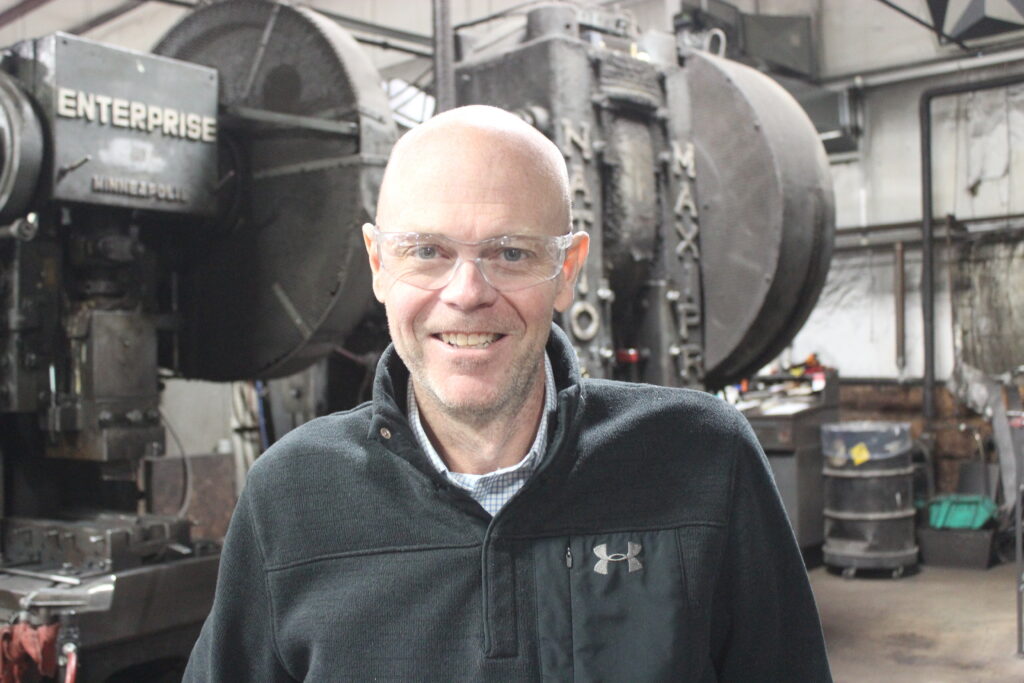
Owner John Swanstrom
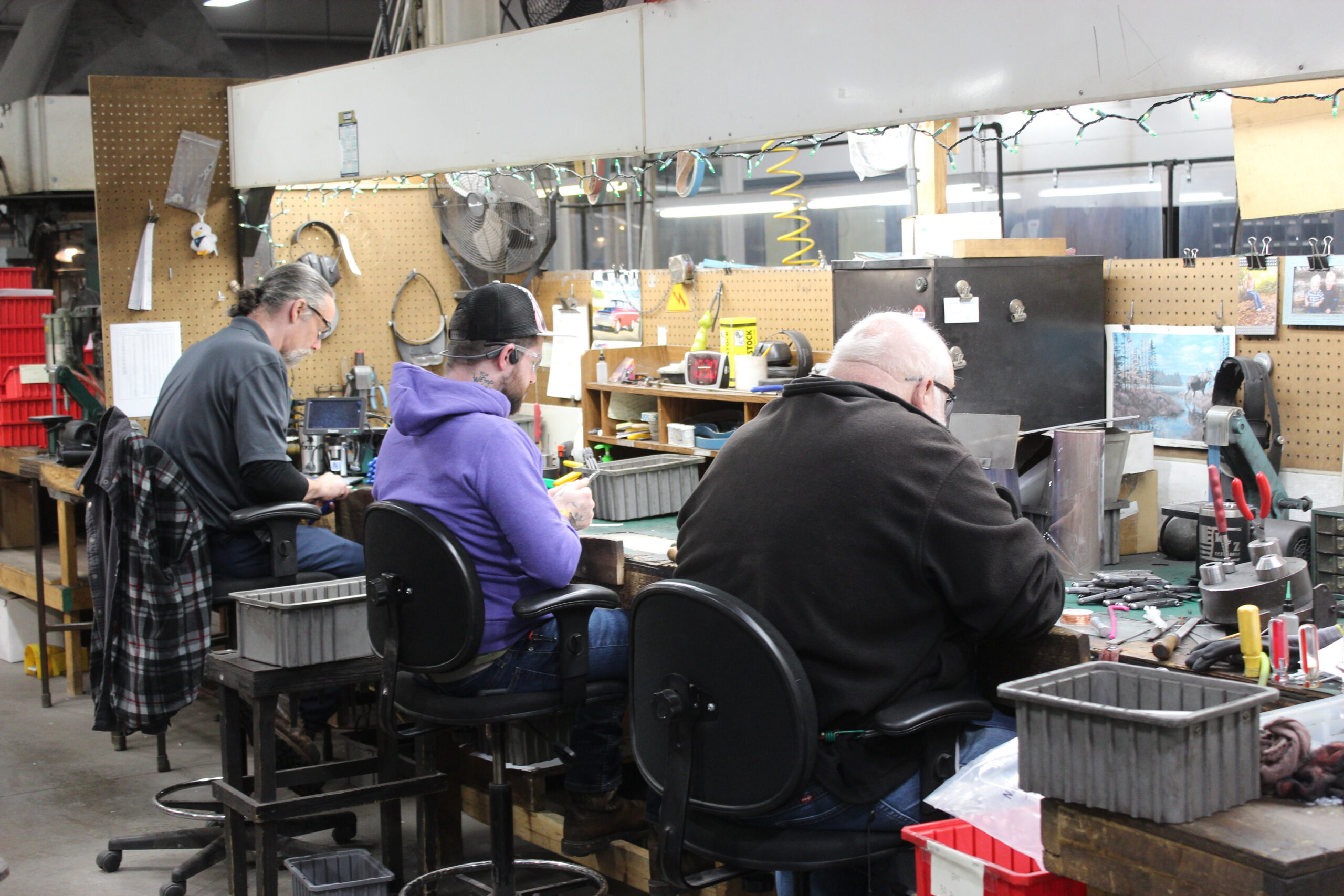
The Swanstrom Tool Family
The Swanstrom Tool facility at 3300 James Day Avenue encompasses 23,000 square feet and is poised to expand. “Ten years ago, we put a 5,000-square-foot addition onto this building, and it’s full. We are looking to add a new 32,000 square foot building next door.”
Owner John Swanstrom is an innovator, a thinker who uses his engineering knowledge, along with his background in metallurgy to think outside the box in developing new sources of revenue. Swanstrom spent a good decade developing precision hand tools used by “medical device manufacturing professionals for hard wire applications such as guide wires and stents.”
Today, the products on the market are regarded as having the highest perceived quality in the business, a credit to Swanstrom’s persistence. “If you know anybody who has a pacemaker or defibrillator, we probably had a hand in making that device. So, we’ve grown into products outside of just the hand tool world.”
Creating a Swanstrom Tool
The life of a Swanstrom Tool begins with the forging process, the first of the 50 to 70 steps for any given hand tool. “Out of one forging I can make hundreds of different design tools,” says Swanstrom. “We have 30 different forgings we make, from a four-inch forging all the way up to a 10-inch forging.”
Swanstrom Tools ultimately produce, in any given year, around 1,700 unique SKUs from that product family of 30 forgings. This ability to produce what are considered small quantity, specially modified hand tools is what makes Swanstrom Tools a worldwide leader.
“They’re very slight modifications,” agrees Swanstrom, “but for access issues, for people getting in to cut or grab it may be just a little tweak, but that’s one of the things we bring to the table. Because we have such flexibility, we’re able to make smaller changes on the fly, where my competition, it’s going to cost them a million dollars to retool a piece of equipment to maybe make a product they’re only going to sell 100 of in a year. It wouldn’t make any sense for them to do it. It does make sense for me.”
The forge shop uses state-of-the-art induction heating technology, constantly running at 2,200 degrees to heat the steel. The forging and cooling process is stressful on the steel. To relieve the stress and bring the hardness back down for subsequent machining, the steel first undergoes a 72-hour annealing process to soften it for machining.
“We’ve got this big, pizza oven type thing to do the subsequent heat treating where we’re holding an oven at 1,700 degrees, 24/7,” explains Swanstrom. “We never turn them off because just cycling them down and cycling them up takes so long and it wears the heating elements out. Everything that we’re doing heat treat-wise, essentially, is electric. I don’t have a heating bill, it’s nothing. In the middle of January our 14-foot overhead doors are wide open. I can’t get heat to go out of here fast enough,” laughs Swanstrom.
He pointed out that Swanstrom Tool is second only to the Cenovus plant in energy use in Superior.
Excess material from the forging process is removed with vertical and horizontal CNC machines. Before the tools are assembled they receive additional heat treatments to “bring the hardness back up on the body of the tool that gives it the toughness we’re looking for,” explains Swanstrom. “There’s a subsequent heat-treating process after that with all of our cutters to put an ultra-high 65 Rockwell cutting edge on those blades to give the cutters that extra-long life.”
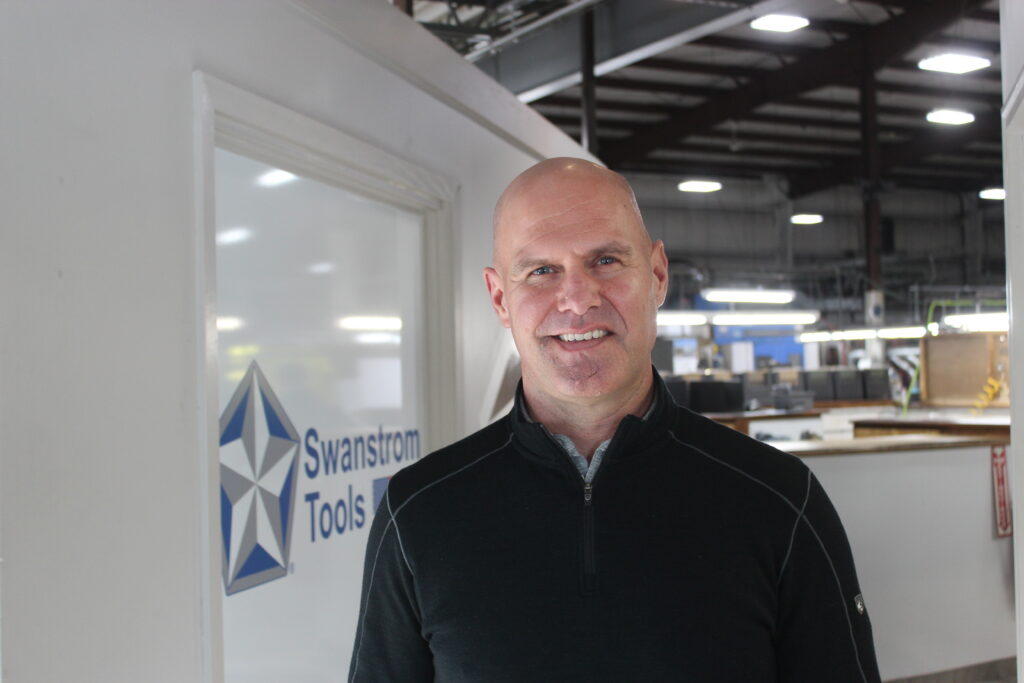
CEO Matt Cochran
The Swanstrom Difference, It’s People
Processes and materials are one part of the reason Swanstrom Tools is successful, but Swanstrom says it’s all about the people that work here. There are currently 57 full- and part-time employees, too many to point out individually, but Swanstrom gave props to Rod Loining, production floor machinist, for his lengthy dedication to the company, and to their most tenured employee, Lynn Swor. “She is our sales manager, started working at Diamond Tool when she was 18 years old, and she’s still going strong.”
Todd Larson, who started on the shop floor at Diamond Tool when he was in college, is now their human resources and safety manager. “His father Jim was the plant maintenance manager at Diamond before he came to work at Swanstrom Tools. I believe between Jim working for my grandfather, my father and myself, he had over 72 years of experience with the Swanstrom family.”
New to Swanstrom Tools in 2025 is Chief Operating Officer (COO) Matt Cochran, transitioning from a career in the banking industry. He’s enjoying the challenge. “Over the last 20 years I’ve worked with a lot of manufacturing and blue-collar companies.”
Cochran is expected to provide a daily leadership presence in the office for Swanstrom Tools, allowing John to focus on sales and innovation.
“Because of my professional background, I bring a different lens to the company. There’s a great foundation here with the leadership, our managers on the floor, our HR manager, our plant manager; a wealth of knowledge,” says Cochran. “My ultimate responsibility is to make sure that we’re communicating back and forth. I’m just going to be a facilitator in that regard, making sure we’re all on the same page and moving forward in the same direction.”
Swanstrom Tools is a great place to work but Cochran admits his biggest challenge, as with many other employers, is finding the right people to put on the production floor. “It’s a specialized product we’re putting out the door, and there are a lot of different production steps, manufacturing steps that go into it,” admits Cochran. “It’s very labor intensive, which is not the norm with most manufacturers these days so we still need those skilled people that can come in and work on a tool and get it to its finished product.”
Forging a New Line of Products
Believing in their employees has always been a hallmark of Swanstrom Tools. No greater example of this is the story of Tim Sheriff, former production manager for Swanstrom. Sheriff, who began with Jack Swanstrom in 1985 doing maintenance, ultimately became the firm’s jewelry tool designer, currently holding seven patents.
Jack Swanstrom had no intention of getting into the jewelry tool market, recalls Sheriff. Eddie Bell, a co-owner of Rio Grande Jewelry Supply in Albuquerque, New Mexico, at the time the largest tools and equipment supplier to the jewelry industry, saw Swanstrom pliers at an electronics expo. Rio Grande approached Swanstrom to develop a line of tools specifically for the jewelry industry, but Jack declined. He did, however, agree with a “handshake” to have Rio Grande market and be the exclusive distributor of Swanstrom pliers and other products for jewelry market.
Serendipitously, Swanstrom changed his mind after meeting with Bell and asked Sheriff, who made jewelry as a hobby, to work with Rio Grande to develop a new product line from the five variations of electronics pliers they were distributing. Sheriff began going to trade shows and talking to jewelers and people that make jewelry and started designing tools.
“I would see things people were doing that I didn’t know how to do, and so I’d make a tool so I could figure out how do it. Then I just started designing tools, and over the years, the five tools have turned into over 200 line items.”
Conforming to Exacting Standards
Quality assurance is a critical part of the Swanstrom process. “We maintain a library of customers’ actual material and provide certificates of compliance that we’ve 100% test cut their material with our tools before they ship out of here. Even though the material may only be the size of a human hair, it can be nasty to cut. In some cases, you’ve got a $100 tool and they may cut four wires with it before they throw it away. That’s just what their process dictates because they just do not want to let that cutter get too dull. It’s really conformance to customer’s requirements.”
For their forgings, Swanstrom typically uses a high chromium 52100 grade steel. “It’s most popular for making ball bearings and airplane landing gear. That gives you an idea of kind of the strength you can achieve with this steel. It’s fairly common, but there’s only one mill that makes it so we order our steel 18 months out at a time.
As a metallurgist, Swanstrom is constantly experimenting with different steel alloys. In 2011 he introduced their revolutionary M-Series of tools, (high-quality, precision cutters and pliers designed for demanding hard wire applications). “I was able to develop a proprietary tungsten carbide for our carbide cutters, and I also have a proprietary heat-treating process where I’m able to achieve a hardness out of the steel that even the mill tells me I shouldn’t be able to achieve, but I’m doing it.”
Swanstrom explains that the steel they use is rated at 65 on the Rockwell hardness scale. “Typically, the mill would say you cannot get it harder than 65 Rockwell. I’m getting it to 67-68 all day long.”
In 2024, Swanstrom introduced their Signature Series line of pliers, one of the first in the world where the frame of the tool is made of stainless steel with a carbide insert. “What I’m hoping to achieve with that is to make that be an autoclavable tool so if they did want to use it in the body, they could, and that’s exactly why,” admits Swanstrom, “we need a separate, segregated building, because we cannot be processing stainless steel and carbon steel under the same roof because of cross contamination.”
The Future: AI, Robotics and New Markets
For manufacturers, AI and robotics are the modern “elephant in the room.” Rather than deny its existence, Swanstrom Tools is taking it head on.
“What we saw in the automotive industry was, rather than everybody using hand tools to cut the plastic parts, companies were investing huge dollars to automate that at the injection molding presses and were using robots to cut those parts out.”
Swanstrom started seeing their hand tool sales drop off because factories were being automated with robots. Well, robots need tools too, so Swanstrom introduced a line of pneumatic degating tools to separate the castings from the mold.
“We either had to join the club or get out of the way. It was just natural for us because have all the equipment to be making that. We were very lucky that I was able to be nimble and move quickly. We now have an entire line of aluminum cylinders that we manufacture.” Swanstrom Tools is now one of the largest suppliers of degating tools to that industry.
3D printing is an emerging manufacturing technology Swanstrom is keen to develop. “3D printing is playing a huge role in medical devices that I think it’s gonna happen in my lifetime,” notes Swanstrom. “I just read a story where they had 3D printed a brand-new infant girl’s cornea replacement, and it worked, so I’m trying to stay on top of that type of technology.”
Back to the Future
Three centuries and four generations of family later, in 2023 John Swanstrom incorporated Xcalibur MetalworkX, a small blacksmith and forging supply business next to Swanstrom Tools. Swanstrom found his opportunity to “get back into the old school blacksmith forging type of products” when he met local blacksmith Chris Gross.
“Gross, a home blacksmith and a chemist by trade, had been forging knife blanks and providing materials to the blacksmith industry for several years. He heard about us and we started a conversation,” says Swanstrom, who was looking to find a way to create stainless steel anvils and other tools from their cast-off steel.
“He’s really good with his metallurgy, you know, he speaks my language,” says Swanstrom, “so we’ve hired Chris as our in-house blacksmith.” The two organizations share multiple forging presses, mechanical and hydraulic (up to 1,000 ton), state of the art heat treating equipment and cutting-edge CNC technologies bringing together traditional blacksmithing with today’s modern metal forming technologies.
Since he purchased the company in 2003 it’s been onward and upward for Swanstrom Tools. “We’re doing about three times the revenue that we did back in 2002 but we’re doing it with half the people as we have invested in the technology,” concludes Swanstrom, “and we’ve maintained our workforce as we’ve grown without having any major layoffs.”
Patrick Lapinski is a freelance writer who grew up in Superior.