
Superior Housing Authority On a Mission to Preserve Affordable Housing
The Superior Housing Authority has been the leading provider of affordable housing in the City of Superior since 1942. In 1986, the SHA expanded into Section 8 Housing with the Choice Voucher Program. The Housing Authority also manages several private properties in Superior and Duluth.
“SHA serves eligible families and individuals by operating and managing quality, safe and affordable housing, and connecting those in need with community services that help achieve greater stability and self-sufficiency,” reads SHA’s operation mission statement.
Across the nation, the greatest threat to affordable housing is not the lack of resources to build, but the lack of resources to operate, maintain and repair existing affordable housing – leading to a nationwide backlog of deferred maintenance. The Superior Housing Authority – led by Pam Benson and a board of five commissioners that includes Superior Mayor Jim Paine, city councilor Lindsey Graskey and Board Chair Bill Fennessy, who also represents the Billings Park district on the Douglas County Board of Supervisors – is working to preserve Superior’s subsidized housing.
The completion of the $36 million renovation of Bayview and Catlin Court this past year has the Housing Authority poised to begin design work on the last major piece of housing due for renovation, the 151-unit Park Place.
Superior Housing Authority
Benson reviewed the programs the Superior Housing Authority provides to area residents to show the scope of their work and responsibility, and talked about what is to come in 2025-26. The Public Housing Program provides rental assistance to qualified income-eligible families.
The Superior Housing Authority owns and operates 466 rental units. Qualified families pay approximately 30% of their adjusted gross income for rent. Many of these units are handicap accessible.
Park Place is the largest public housing development, with 151 units ranging in size from 1 to 4-bedroom units. The Billings Park Villas are a smaller, 28-unit complex of one-bedroom units. The Authority also operates several “scattered sites,” as well as single-family homes and duplexes throughout Superior.
The Superior Housing Authority participates in the HUD Rental Assistance Demonstration (RAD) Program. “RAD is a voluntary program run by the U.S. Department of Housing and Urban Development (HUD),” explained Benson, Executive Director of the Superior Housing Authority. “Under RAD, HUD will change the way it provides rental assistance to the property from public housing to a long-term Section 8 assistance contract. The Section 8 program makes it easier for SHA to access money to repair and improve the property, now or in the future.”
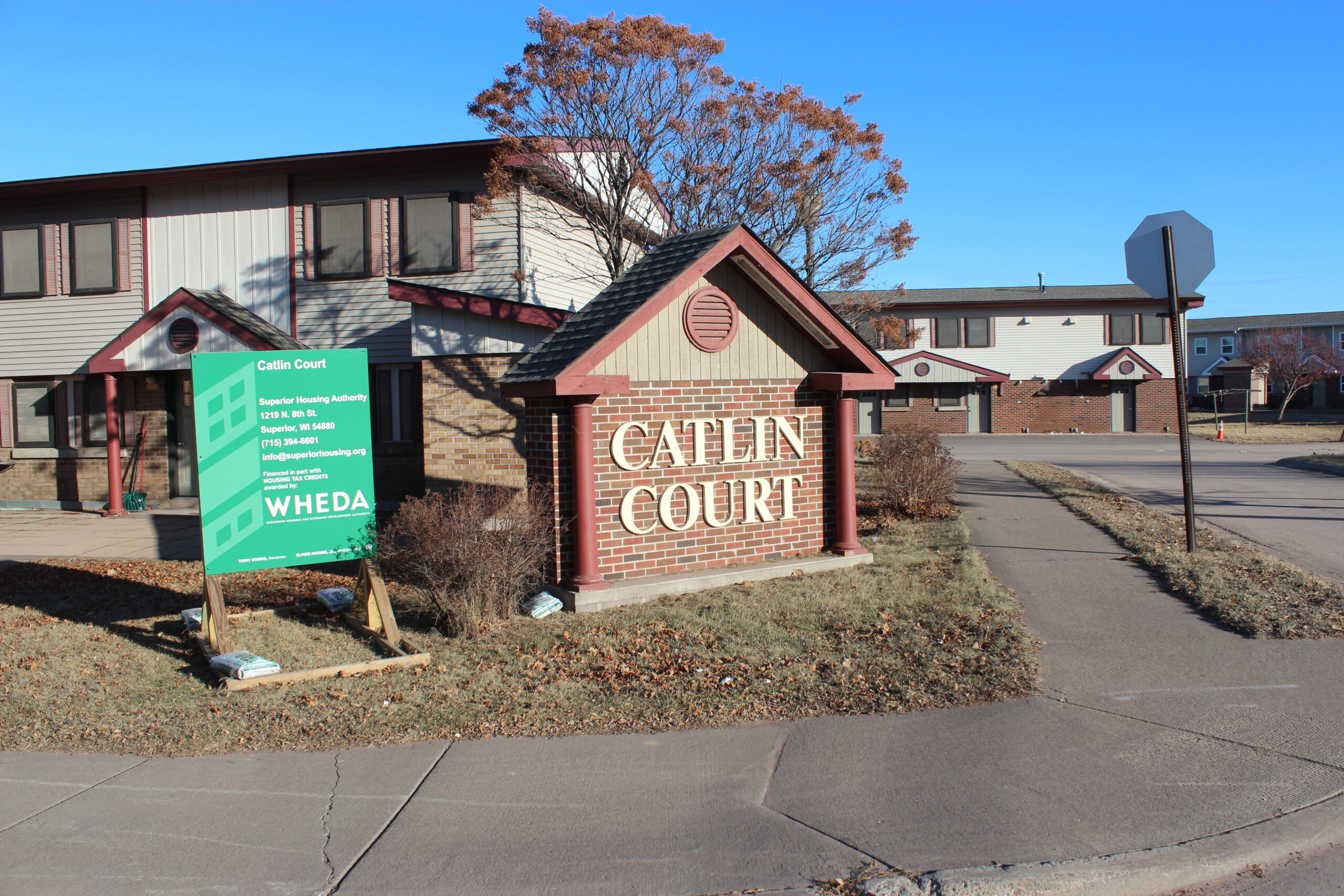
The Catlin, LLC, and Bayview, LLC, properties were converted from the Public Housing program to Project Based Rental Assistance (Section 8) under the Rental Assistance Demonstration (RAD) program. These include 1- to 4-bedroom apartments. Catlin Court is a 136-unit development with 1- to 4-bedroom units. Bayview, in the central part of Superior, is smaller with 64 units of similarly-sized apartments. Under the program, Catlin and Bayview have undergone full renovations which include: flooring, water heaters, windows, doors, washer/dryer hookups, cabinetry, kitchen appliances, furnaces, and a new community room at Bayview.
“Anyone that has been involved in any level of a construction project knows that things rarely go according to plan and are not without setbacks. Although a contingency is included in any construction budget to protect against inevitable surprises and increased project costs, it doesn’t necessarily protect against frustration or the weariness we experience,” says Adam Ferg, Director of Technical Services and HCV inspector.
Ferg has been with SHA for more than 20 years and is responsible for ensuring that housing units meet the Housing Quality Standards (HQS) set by the U.S. Department of Housing and Urban Development (HUD) for the Housing Choice Voucher (HCV) program. Ferg recognizes the impact these large projects have on the tenants and is grateful for their cooperation.
“If there is something to be learned from this project that I can carry with me into the next, it is to have more appreciation for our residents and a greater understanding for all that they experience throughout a project like this,” he said. “We recognize it hasn’t been easy. Many families were moved into temporary units while construction was underway and stayed longer than anticipated due to unforeseen circumstances. Packing and unpacking multiple times, living among the noise of construction, and experiencing temporary utility outages isn’t for the faint of heart. I’m thankful that our residents were flexible and understanding throughout this difficult process. We’ll continue to strive to make this process as smooth as we can while remaining committed to providing quality affordable housing for our community.”
Housing Choice Voucher Program
A popular program the Superior Housing Authority participates in is the Housing Choice Voucher Program. The Housing Choice Voucher Program was established by the Housing and Community Development Act of 1974. “This program, funded by HUD, provides rental subsidies for up to 170 families who live in privately-owned homes or apartments throughout Douglas County.” Families pay approximately 30% of their income for housing and utilities and the Superior Housing Authority pays the difference. The Housing Choice Voucher Program is a partnership between private landlords, families, and the Housing Authority.
Mary Pelofske is Director of Housing Programs. She keeps everything in motion. Her role as Director of Housing Programs is to administer SHA’s portfolio of:
- 184 Housing Choice Vouchers (HCV), including:
- Regular HCV/Section 8 Vouchers
- Veterans Administration Supported Housing (VASH Vouchers)
- Foster Youth to Independence (FYI Vouchers)
- 266 Public Housing Units
- 200 Project Based Rental Assistance (PBRA)
Pelofske manages a staff of four specialists who each focus on an area of expertise (Intake, Vouchers, Public Housing and PBRA).
“These programs are highly regulated by HUD and/or the IRS, and each program has its own set of unique rules and regulations that are constantly changing,” explains Pelofske. “Keeping up with training and policy updates is a priority. This staff is quick to learn new policies and procedures and keep the day-to-day tasks moving, ensuring we serve our families and community as best we can.”
The Park Place renovation is a big step toward what Pelofske sees as SHA’s greatest challenge, preserving affordable housing. “We understand that we are in an environment where we don’t always have the political support or the funding, we need to make it happen. But we will always work toward that goal,” says the Director of Housing Programs.
“We are always looking for ways to expand our ability to provide affordable housing to the community. Whenever HUD offers additional programs or vouchers, we apply or ask to participate. We have increased our voucher pool by 8% since 2019 and will continue to apply for anything available. The most recent PHA 5-year plan includes the goal of partnering with a Developer to build 50-100 new units on the vacant land at Catlin.”
Pelofske has worked with Benson for almost 20 years, first at Duluth Housing and Redevelopment Authority (HRA) and now in Superior.
“Working in the housing field is hard work, yet very rewarding,” concedes Pelofske. “Pam has taught me so much in our years together and I am very grateful for her leadership. This RAD conversion project was a big one.”
Preserving High-Quality, Affordable Living Spaces
Benson started at SHA in June 2018, as the Deputy Director and became executive director in January, 2019. She has an extremely challenging job, but the results to date are satisfying.
It took Benson a little bit to get a lay of the land, but she steadily negotiated meetings and on-site visits, learning about her team as well as the strategic players while fine-tuning the nuances of working with HUD and various state and local agencies. During the past five years, under Benson’s leadership, the Superior Housing Authority has been committed to preserving high-quality, affordable living spaces for low-income residents of Superior.
“Our Section-8 program was underutilized, and now we maximize all of our budget authority. We spend as much money as we possibly can to help people out there. That’s been successful.” When Benson joined SHA, they were using about 100 vouchers, and now they’re up to 160.
“We had so many capital needs on all our public housing, so we focused on Cat and Bay,” said Benson.
“We partnered with Bear Development, and they received the low-income housing tax credits, and we remodeled the apartments. Bayview is done. It’s totally been remodeled. We still have some exterior work to do, but the apartments are absolutely beautiful,” said an ecstatic Benson. “We were able to not only renovate the apartments, but we’re able to preserve the subsidy through the multi-family arm of HUD. Those units are not under Public and Indian Housing anymore. They are under project based rental assistance.”
“The Housing Authority has a ground lease with the properties,” Benson explained, “We still own the land and lease it to them, and we are what they call the Managing Member. We have a one per-cent interest in the property, and with that it gives us control. We determine who manages the property, and then we get the right for first refusal as the managing member. So, they can’t just at the end of the 15 years sell it to somebody down the street. They have to work with the Housing Authority.”
The SHA manages several properties in both Superior and Duluth. In Superior these include the New York Apartments, Grand Central Plaza, Rosewood Apartments, Washington Apartments and the Cottages.
Patty Nadeau is the property manager for 176 units in Duluth that are owned by private developers. Among them are the Decker dwelling, which is 42 family units. They also manage a new re-development called Brewery Creek in Duluth. “It’s a little more unique in the fact that there’s youth, and we partner Life House and HDC Human Development Center, who provide services to the youth. They’re 18 to 24 to be in their program, and then they get a voucher, and they move into Brewery Creek.”
What’s Next?
The construction of Catlin will be done in July 2025. Looking forward, Benson would like to see some of the available land there behind the Virginia L. Deetz Center on Catlin Avenue be used to build one-bedroom apartment buildings. As Pelofske noted, the envisioned project adds between 50 to 100 units. “
We have a waiting list for our one-bedroom’s that is closed, so we can’t pull anybody off the waiting list,” adds Benson. “I want to believe there’s about 300 people on that waiting list. The demand for one bedroom housing is very much out there. The need for one-bedrooms is tremendous, absolutely tremendous.”
Planning for the renovation of Park Place will begin in 2025. The SHA will again establish partnerships to have the complex renovated.
“We’re not quite sure what that will look like, whether it’ll be just a substantial rehab, or if it would be torn down and rebuilt,” says Benson. “We just have to go down that road and see what’s best for the site. When we re-do Park Place, the plan is to have a usable daycare center there. It’s not being utilized now because it’s not barrier free, so we had to close it down. To have that reopened we can contract with a daycare provider, because there’s such a need for daycare. That’s another thing that we want to do.”
Benson says SHA is also planning is to upgrade the Peter Rich Center. “It hasn’t been utilized because it’s not barrier free, and one of our next projects will be to make sure that Peter Rich is barrier free. Those are all big-ticket items that need to happen, but that’s one of our next projects that I’m excited about,” says Benson, looking forward. “One of the other things too is Bayview has a community room now. It never had one before, and it does now, for our residents to use for little parties. We will have an office over there also.”
Fantastic staff
The Superior Housing Authority operates with a relatively lean staff of 26 employees, with just less than half in the maintenance department. Benson thinks they’re great.
“They all do a great job. They’re responsive. The residents really depend on them to do what needs to happen. I don’t get many complaints about the maintenance. The staff I have over here is just so fantastic. They respond quickly to work orders. You call in a work order today, they’re going to be there. And, when you think about that too, you know the maintenance they’re on call 24 hours.”
Benson says a lot of credit for their success as an organization is due to representatives on the nonprofit’s Board of Directors. “I want to give a lot of credit to my initial board. Bill Fennessey, Sue Rink, Doug Finn, and Lisa Jordan, I think she was a resident caretaker,” laughed Benson. “They really stepped up and believed in preserving the housing. And these can be very scary adventures if you don’t know what you’re doing.”
Board Chair Bill Fennessey has been involved with the Superior Housing Authority for 30 years. “I find personal satisfaction in helping individuals and families that are at a point in their lives where they need assistance.”
He says the board performs several roles. They support the SHA in an almost observational manner “by providing guidance to management, by entrusting operations to our experienced and professional leadership, and by providing operational oversight at the macro level and avoiding direct involvement with day-to-day operations.”
The board also advises the SHA, says Fennessey. “We act as a sounding board for management on key issues. Drawing from our diverse backgrounds, the board provides recommendations and insights. Public housing provides essential and often life-changing opportunities for individuals and families by providing access to safe, affordable housing and supportive services. Advocating for public housing supports community stability, by assisting individuals and families achieve a stable living environment.”
Superior residents who want to learn more can contact the SHA directly, contact board members and visit the website at superiorhousing.org. “It’s easy to remain passionate about our work when I see what we have accomplished, the challenges we have addressed and the opportunities that lie ahead,” concludes Fennessey.
“Affordable housing,” says Benson. “People throw that word out there, and what’s affordable to me may not be affordable to you. And, so, I think it’s important to look at, yes, there is a need for market rate. There is a need for affordable. We need to lift up our community. We need to help our fellow citizens here, and this is how we do it. The Housing Authority, the City of Superior, Douglas County, we all need to make sure we preserve our housing.
“We help so many people, and people are so grateful. It feels so good when somebody comes in here, and they’re going through the process, and then you give them keys; they’re so grateful. It’s so nice to be able to help those families,” concludes Benson. “And we need to help as many as we possibly can.”
Patrick Lapinski is a freelance writer who grew up in Superior.