
Duluth Superior Symphony Orchestra Executive Director Brings New Vision
A young man appeared bewildered in the lobby of the Duluth Entertainment Convention Center (DECC) last May. He stared at the floor, shaking his head at what he had just heard.
“That was the single most thrilling night of my life,” he said to his friends, all talking over each other in their excitement to relive their experiences.
The Duluth Superior Symphony Orchestra (DSSO) had just performed the soundtrack to Star Wars Episode IV – A New Hope alongside a screening of the film. The process, known as “live to projection,” is one of the many different methods symphony orchestras are using to bring in new audiences.
Many audience members arrived in full Star Wars attire, dressed as a storm trooper or Princess Leia. A man dressed as Darth Vader walked up the aisle waving a light saber before the concert, prompting the audience to cheer at his effort. And then the concert began.
At first the audience, lost in the story, shouted and clapped for Star Wars characters Luke, Leia and Hans. The energy of those attending mixed with the live music, creating an even louder crowd than in a movie theater. Slowly, the orchestra, cast in darkness to keep the focus on the film, began to pull their attention. Playing the famous John Williams score with such expression and passion, the cheering and clapping now came for them.
During the movie’s fight scenes, through chase scenes, the DSSO won them over with a roaring brass section, sweeping strings, energetic percussion and soaring woodwinds. The crowd began the night as monthly symphony subscribers and first time attendees, but ended it as a community. Loudly and continually the audience showed their appreciation for live music and this shared experience.
“Truthfully I didn’t want to come tonight,” one woman admitted to me at the end. “I’m a season subscriber and prefer classical concerts. But this – this was worth it,” she said. “Look at all these people learning what music can do.”
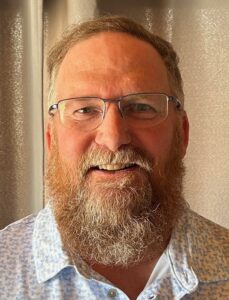
“Showing movies is a way to reach people who wouldn’t think of attending an orchestra concert,” says J. David Arnott, Executive Director of the DSSO. “It’s a way to visually and aurally draw a line between what people think of as the movies and what people think of as music.”
The May 2025 concert was so popular in pre-sale ticket sales, the symphony announced another concert the following day, which promptly sold out as well. The DECC holds an impressive 2,199 seats.
“Is it expensive? Yes!” Arnott laughs. He is still waiting on the final invoices to see if this gamble will pay off. Another live to projection showing is scheduled for the film Indiana Jones and the Raiders of the Lost Ark in April 2026, with an additional screening concert already announced for the following Sunday matinee.

The Many, Many Hats of Arnott
Arnott was named the Executive Director of the DSSO in September 2024. “It’s not a retirement job. I learned that pretty quick,” he says. He also acts as the Stage Manager, Personnel Manager, does the budgeting, engages and communicates with the soloists, and facilitates work with the stage hand union. And plays in the orchestra.
A member of the DSSO since September 2002, Arnott first began in the violin section, then switched to the viola section, and now plays largely in the first violin section due to the rarity of finding them. “We’re having a hard time getting first violins.”
Before being named Executive Director, he was named the Manager of Orchestra Operations in August 2022.
Symphony attendees can already see a few changes as Arnott brings more heart to the symphony. At the September concert, a land acknowledgement was presented in Anishinaabe by DSSO Board member Katrina Werchoski, a member of the Red Cliff Band of Lake Superior Ojibwe. And the December Holiday concert included a request for food donations for Chum, Duluth’s safety net for people experiencing hunger, homelessness, and poverty.
“That was a last-minute idea,” says Arnott. “I wish we’d thought of it earlier, but we did manage to collect 69 pounds of food.”
Finding His Way to Minnesota
Arnott grew up playing in his school’s orchestra in Islip, New York. By the tenth grade, he had invitations from other schools to play in their musicals, along with three other orchestras. Eventually he studied with Charlie Rex, the associate concertmaster of the New York Philharmonic. With him he made the switch to viola and was invited to study music at the Philadelphia College of Performing Arts, where he earned his Bachelor of Music.
For graduate school he studied at the lauded Curtiss Institute of Music in Philadelphia, PA. After earning a Masters in Music and an Artist Diploma, he went to the University of Southern Mississippi to work on his Doctoral of Musical Arts (DMA).
In 2001 he became a professor at the College of St. Benedict and St. John’s University, where he taught classes like Ear Training, Upper Strings, Opera Workshop and Chamber Music. He also led the orchestra and conducted musicals. He “retired” in 2022 and became the DSSO Operations Manager before becoming the Executive Director in 2024.
The Reality of Modern Orchestras
Reaching new audiences is the goal of every symphony and Arnott has already taken steps. He increased the symphony’s social media presence (look for them on Facebook, Instagram and TikTok), and brought programming to the Current. “I’d like to increase community outreach. I’m looking at a few different ideas,” he says.
Symphony orchestra concert attendance has been in decline in the U.S. since the 1990s. The Covid epidemic just dramatically accelerated it. The DSSO shares this struggle. The website americanorchestras.org reports “Despite the differences between individual orchestras, what is clear is that audience preferences and priorities have profoundly changed. As a result, the orchestra field will need to think differently: meeting audiences where they are today – with new approaches to presentation, programming, marketing and customer experience – will be critical.”
“We’re finding ways to engage new audiences,” Arnott says. “ I call it ‘orchestral music’ so people will relate to it better.” From commercials to movies to video games, orchestral music is a prominent soundtrack to our modern entertainment.
Visions for the Future
Arnott has many visionary plans for the future. “I’dlike to see us reach a younger audience, do more outreach to millennials and older Gen Z’s,” he says. To make concert attendance more affordable, he is considering running more specials for younger age groups. “And I would love to see more outreach in the schools.”
The DSSO has already taken steps to reach new audiences. They added more affordable tickets, combined programming newer works with “Pops Concerts” and other well-known pieces, and strengthened community ties by working with the DSSO Chorus, the all-volunteer ensemble directed by Richard Carrick. They also invited the Minnesota Ballet to join them for certain concerts, along with the Duluth Superior Symphony Youth Orchestra (DSSYO).
Some things, however, will not change. “I’d like to keep it a high quality, vibrant orchestra presenting a wide variety of repertoire,” he says. “Something old, something new – something that entices the next generation of concert-goers to begin attending.”

Terry Vermillion with the Anchor Bar bell used in the DSSO’s performance of Carmina Burana.
Superior Connections
A welcoming atmosphere will also never change. “I want the people of Superior to know it’s OK to wear your Packers gear to a concert. Many of our musicians are from Superior,” says Arnott.
Concertmaster Erin Aldridge who just celebrated her 20th anniversary as concertmaster, is a Superior resident, along with pianist Alexander Sandor, violinist Nairi Stack, violist Kelli Barker, saxophonist Gregory Kehl Moore, and former substitute flutist Kathryn Sandor.
Violinists Jenna Mattonson and Amy Eichers both teach Orchestra at Superior Middle School and Superior High School respectively and flutist Melanie Sever is a Senior Lecturer at University of Wisconsin Superior. “We are eager to work with Superior schools,” says Arnott.
To make concert evenings easier to attend, one of the many DSSO shuttles begins at the National Bank of Commerce in Superior. Additionally, a few concerts have been held in Superior. Both a Masterworks Concert and a performance of the Highlands String Quartet, an ensemble composed of DSSO members, were performed at the Cathedral of Christ the King in Superior.
The DSSO also supports local bars. “We celebrate at the Anchor Bar in Superior and, in fact, the bell from [the recent performance of] Carmina Burana was from the Anchor Bar!”
From Carriage House to the DECC
Always a diverse and thriving artistic community, the Twin Ports area had professional orchestras as far back as 1883. The Duluth Civic Orchestra began in 1931 in the carriage house of music teacher Alphon Flaaten. Led by conductor Paul Lemay, principal violinist and assistant conductor of the Minneapolis Symphony Orchestra (now the Minnesota Orchestra), their first performance was December 26, 1932.
Concerts were originally held in the Duluth Armory located on 14th Avenue East and London Road. In 1966, the orchestra moved to the newly constructed DECC. And in 1974, the name was changed to the Duluth Superior Symphony Orchestra to reflect the close ties in the Twin Ports. After more than 90 years of entertaining and bringing new music to audiences, the DSSO has had 10 music directors and conductors, including current conductor Dirk Meyer.
Regional Orchestras
According to the League of American Orchestras, the DSSO is a Tier 5 Orchestra. Tier 1 includes orchestras with large budgets like the New York Philharmonic, Boston Philharmonic and the Chicago Symphony Orchestra. Other Tier 5 Orchestras in Wisconsin include the Racine Symphony Orchestra and the Wisconsin Philharmonic.
Also known as regional orchestras, they are made up of highly accomplished musicians who perform once a month and are reimbursed per rehearsal and concert. Like other regional orchestras, the DSSO is funded by ticket sales, concert sponsorships, bequests, individual donations and grants.

Duluth Superior Symphony Youth Orchestra (DSSYO)
“I love the opportunity that we provide to the students to have meaningful and high-level musical experiences,”says DSSO flutist Melanie Sever, DSSYO Administrative Director and the DSSYO Concert Orchestra Conductor. Available to students ages 10 years old through high school, the DSSYO has shaped music and created musicians for 85 years.
“Many former DSSYO alumni are now music educators and members of the DSSO and other regional community orchestras in the Duluth/Superior community,” says Sever.
The DSSYO provides many benefits for the young interested in learning more about orchestral music. They rehearse weekly, receive coaching by professional musicians, attend a yearly retreat, and perform 3-4 times per year, depending on the ensemble. They also get to participate in side-by-side performances with the DSSO, learning “on the job” what it’s like to play in an orchestra.
“The DSSYO provides an opportunity for students to learn and play orchestral music in a full orchestra setting (with percussion and winds). The students who participate are very motivated, having chosen to participate in this activity outside of school. The level of music making is generally more challenging than can be had in the school setting,” says Sever. “We also attract many homeschooled students who do not have access to other music programs for ensemble experience.”
Similar to a professional orchestra, students are accepted through an audition process in the Concert Orchestra and Youth Symphony levels, but all string players are accepted without audition at Sinfonia level. Scholarships from the Depot Foundation and the DSSO are available for those who may need them.
“We teach the whole person through the medium of music, developing an advanced appreciation for classical orchestral music, competency, and teamwork in each member.”
The DSSYO has seen a dramatic increase in participation from Superior schools. “At the middle school, orchestra teacher and DSSO violinist Jenna Mattson has been wonderful in encouraging her students to join the Sinfonia program. We also enjoy support from the middle school band director, Brian Langlee. At the high school, orchestra director and DSSO violinist Amy Eichers and band director and DSSO substitute tubist Dan Eaton have actively encouraged their students and worked closely with me to get their students involved,” says Sever.
Makeup of the Orchestra
A symphony orchestra is made of four types of instruments: strings (violins, violas, cellos, double basses, and harp), woodwinds (flutes, oboes, clarinets, bassoons, saxophone), brass (French horns, trumpets, trombones, tubas), and percussion (timpani, chimes, snare drums and piano are just a few).
Who are the members of your DSSO? “The DSSO has 83 members. We have three constituencies: people with day jobs and play on the side, Duluth/Superior music teachers and professors, and one or two who are full-time commuter professional musicians,” says Arnott.
The DSSO plays six Masterworks concerts and two Pops concerts. “I’d like to get back to three, true Pops concerts,” says Arnott.
Many musicians come from surrounding cities, the Iron Range, and other locations in the area. “Thirty-one of our current 75 members are considered commuters.” This adds to the expense for the orchestra as they pay mileage. Musicians “win” the job by a series of blind auditions. A long-standing tradition in music, Arnott does not like this process. “Auditions are not the best way to pick a musician. I would prefer to play with someone for a concert. Let’s make it similar to the conductor search. Auditions are just stressful.”
Without the full-time pay, odd hours and diminishing audiences, why do some still play in an orchestra? “We enjoy our colleagues,” says Arnott. The DSSO also wants to provide the opportunity to hear live music. “It’s a quality-of-life issue. Hearing live music is one of life’s joys. There’s a reason bars have live bands in town. It really is a musical area.”
Profiles of Superior Musicians
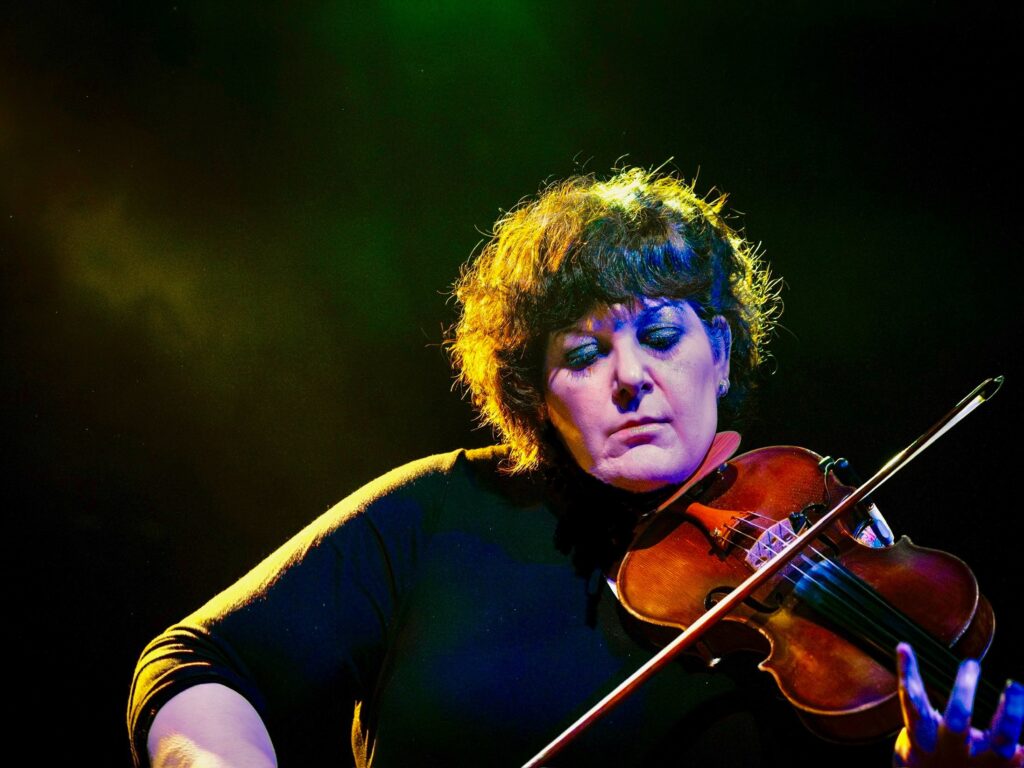
Erin Aldridge, Concertmaster of the DSSO
How long have you been playing with the DSSO? I’ve been playing for 22 years, 20 as concertmaster.
What do you like about playing in the DSSO? There is something incredibly powerful when you get a large group of musicians together to create incredible music. There is also the social side; playing with friends is a blast. And our audience is pretty incredible – we feed off of their energy when we are on stage. All three aspects together create a really fun and vibrant environment.
What were some of your favorite performances?
I have had a lot of “favorite” performances so it is hard to name just one, but most recently it was the first concert of our 2025 season. Collectively it was one of our best, and I absolutely love playing Scheherazade! One of my favorite moments happened many years ago at a John Williams (film composer) tribute concert with the DSSO. We were ending the concert with the theme from Star Wars. I happen to have a Princess Leia headband, and I asked Dirk if I could wear it in the concert (I always check any shtick with Dirk first). He wanted to play a little joke on everyone with the headband.
The only people who knew about this were Dirk, our stage manager, and me. When we got to the end of the concert Dirk was just about to cue the orchestra to play Star Wars when I yelled and stopped the show. (Of course, this was preplanned, but no one else knew that.) You could not only hear a gasp in the audience, but you could also hear one on stage from the musicians. Dirk and I “bantered/argued” on stage, then I put on the headband and turned to the audience so they saw the Princess Leia hair, everyone laughed, and then we played the theme. Several orchestra members came up to me worried that Dirk was mad for interrupting the concert. They didn’t know it was initially his idea.
How else do you make a living as a musician? I teach in the Music Department at UW-Superior, I teach pre-college lessons, and I perform in both the classical and non-classical realm.
What is your music background? Bachelor of Music in Violin Performance from Indiana University Jacob School of Music | Masters of Music and Performers Certificate in Violin and Chamber Music Performance from UW-Milwaukee | Doctor of Musical Arts in Violin Performance from UW-Madison.
What are your hopes for the DSSO? I hope that we are still an important part of the Duluth-Superior community, we are still playing high-level concerts that our audiences find exciting, and that we are thriving for years to come.
What are your Ideas for reaching the next generation? To continue to expand out into schools and offer fun and engaging programs that get kids excited about orchestral music.
Have there been any shifts you’ve noticed since you started? COVID provided the biggest shift in terms of audience growth. We lost a lot of concerts and audiences had to be rebuilt. I think the DSSO has done a good job of creating experiences built around attending a concert. We also are doing a lot more informal performances that get us out into the community (vs people only coming to Symphony Hall to hear us), and making music accessible for all. I am all for breaking down concert stereotypes and bringing different genres together in creative ways.
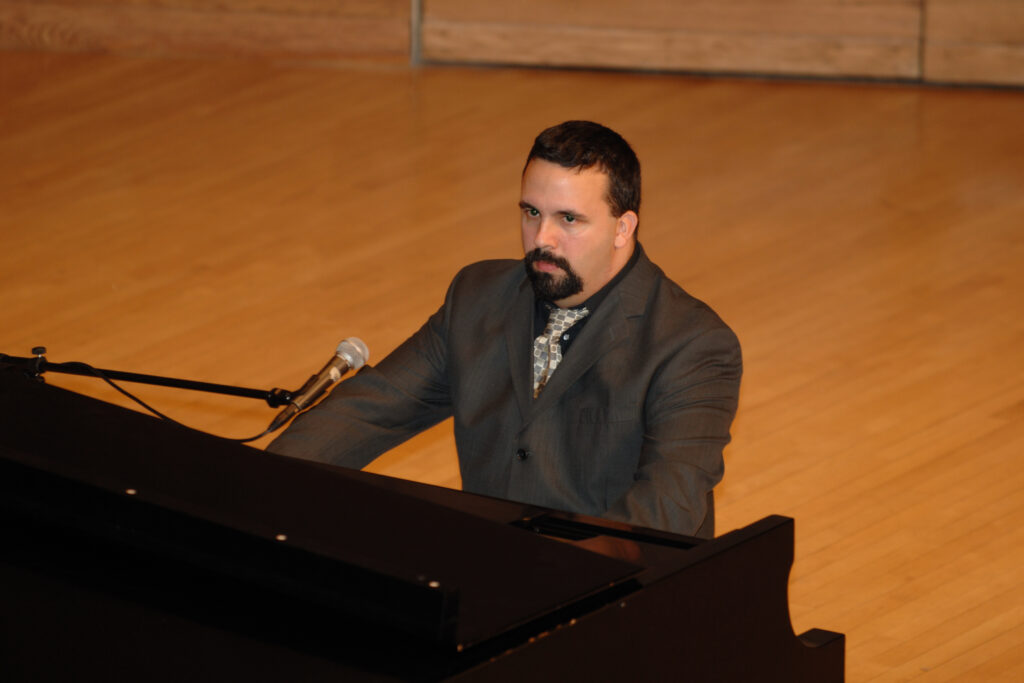
Alexander Sandor, Principal Keyboard with the DSSO
How long have you been playing in the DSSO? I started in 1994, my junior year of college. I became the Principal Keyboard as of 2023.
What do you like about playing in the DSSO? I enjoy the challenge of learning new music, in a fairly short time frame, and then rehearsing and performing it. I find it to be extraordinarily stressful! The rehearsals are actually more stressful and intimidating than the performances because of the pressure of playing up to the level of all the other excellent musicians. But once I’ve done my preparation, the pressure transforms into an exhilarating excitement.
What changes have you seen? I’ve played under three different conductors, and while the orchestra’s roster continually churns, it has always played great music at a high level. We still play many of the standard orchestra repertoire, but additionally venture out into less well-known works, and regularly play newer music.
What were some of your favorite performances or stories? As a college student, I filled in for the soloist on a few hours’ notice. The piece was Beethoven’s Emperor Concerto, and the soloist had injured her arm at the airport. She went to the dress rehearsal, struggled with the pain, then went to a doctor who advised her not to play. This sent the orchestra into a frenzy trying to find a replacement who could come in a matter of hours. I happened to have been studying the piece, and my teacher at the time, Dr. Beth Gilbert, was then the principal pianist. I had already been invited to a rehearsal earlier in the week to play with the orchestra. (That rehearsal, however, was nearly canceled due to a blizzard, but we did it anyway.)
All this frenzy was unbeknownst to me at the time. I remember the day of the concert, being called into Diane Balko’s (former concert master, and one of my professors at UWS) office. I entered with great trepidation, assuming I was in big trouble. She told me the situation: there were numerous phone calls going out around the country to find a soloist, but that I should be on deck and ready to go. And this had to be kept top-secret.
I went straight to the practice rooms and practiced like crazy for several hours, after which she told me I would be playing. I still couldn’t tell anybody – they were worried that if word got out that a college student was playing, nobody would come. (I told my parents and some classmates though.) I think the gig went pretty well – the audience seemed to LOVE the idea that a local kid was doing this.
How else do you make a living as a musician? My teacher in grad school told me to “wear a lot of different hats” as a musician, as it can be challenging to make a living as a freelance artist. I teach privately, and do a little adjunct teaching at UWS. I am the Pianist/Organist at United Presbyterian Church in Superior. And I freelance doing weddings, funerals, office parties. I’m also proficient in ragtime, and I’ve played at festivals all over the country, including the Scott Joplin International Ragtime Festival. I’ve been a ballet/modern dance accompanist (at Interlochen Arts Academy, and also with the Minnesota Ballet).
What is your music background? I have a Bachelor of Music in Performance from UW-Superior and a Masters in Music Performance from University of Arizona.
What are your ideas for reaching the next generation? As a teacher, I encourage my students to attend as many concerts as possible. It’s especially meaningful when students hear and see their teachers making music, using the same concepts and skills they are learning.

Kathryn Sandor, Former Substitute Fluist
When did you start playing with the DSSO? I started subbing with the DSSO in 1999 and had to stop due to nerve damage.
What did you like about playing in the DSSO? I absolutely loved playing with them! There are so many fun flute parts in the orchestra repertoire. Also I loved collaborating with fellow musicians. It was fun to share the experience of performing with others (versus soloing).
What changes have you seen? I’ve worked with three conductors while subbing. Each director brings their own unique style and philosophy when it comes to orchestral playing and conducting.
Do you have a favorite performance? I loved playing anything by Mahler! To sit on stage with a huge orchestra and a large choir behind you is quite something to experience. I’ve also played Stravinsky’s Rite of Spring three times. Fun to play but quite challenging!
Do you have any fun stories? Many years ago the lights went out before we finished the piece in a live performance. They were supposed to dim at the very end, but it started too soon. The audience thought it was great. The musicians – not so much!
How do you make a living as a musician? I’ve been a band teacher for 27 years. I love teaching!
What is your music background? I graduated from UWS with degrees in music education-instrumental and flute performance. I have a Masters in Education from the College of St. Catherine.
What are your ideas for reaching the next generation? I also hope the symphony can continue to connect with the next generation of symphony-goers. The movie showings with a live orchestra is a hit, along with creative programming and chamber performances.
Rose M. Fife is a freelance writer and musician. She lives in Duluth with her family and still mostly feral dog.
I